Beauty, Entertainment, Food... TOP 40 rewards programs for customers in 2026
Read now


Running coupons in retail looks simple on the surface, yet the moment campaigns spread across stores, apps, email, SMS, and POS systems, the setup becomes far more demanding.
Retailers need tools that can handle large code volumes, real-time validation, customer targeting, and reliable tracking across every channel customers use. A basic promo code generator rarely covers all of that, which is why many teams move toward dedicated coupon platforms such as Open Loyalty or other retail-focused engines that bring more structure and flexibility.
The list below walks through solutions used across retail, grocery, QSR, and eCommerce. Each platform approaches coupon management differently. Some focus on mobile delivery, others on deep POS connections, and some lean heavily on APIs and customizable rules.
The goal of this guide is to help you compare these approaches and find a setup that fits your retail model, promotion style, and internal processes.
Coupons remain one of the fastest ways to drive engagement and influence buying decisions, yet running them at scale brings added complexity. Retail teams juggle multiple channels, shifting customer expectations, changing promo rules, and the need to track coupon issuance and redemptions closely to understand what actually works.
Note that the basic code generator can't keep up with that pace. Advanced coupon software helps retailers run consistent, targeted promotions across stores, apps, and online touchpoints while keeping everything organized behind the scenes.
The reasons below show how a modern setup supports day-to-day work and long-term growth.
In retail, attention is expensive, and keeping it is even harder. According to our insights, the cost to attract retail customers varies greatly depending on the strategy, with average customer acquisition costs (CAC) ranging from approximately $15.92 for email marketing to over $88.00 for direct mail.
Other factors, such as SEO, social media, and online paid ads, also contribute to this cost. The overall price includes marketing expenses, such as website development, advertising, and promotional activities, as well as other operational costs, including labor and occupancy.
That's the main reason why digital coupons have become one of the most reliable engagement levers. When retailers deliver relevant, well-timed offers (instead of generic "10% off everything" blasts), customers start paying attention.
A shopper who receives a personalized discount on the category they actually buy from is far more likely to interact with the brand again. Over time, these small moments of recognition build trust and repeat visits. Note that the foundation of loyalty programs is in any retail environment.
💡Find out how to optimize loyalty program costs with the ultimate checklist.
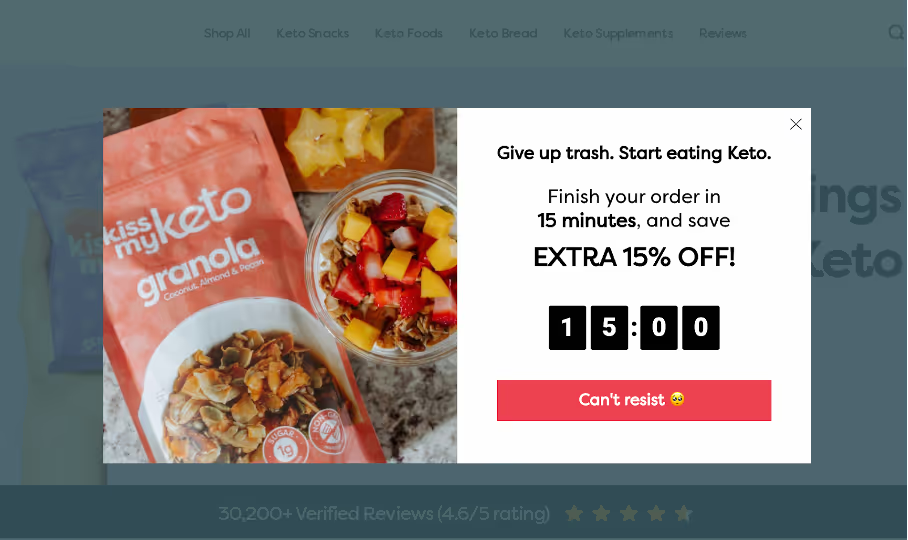
Coupons often get labeled as a simple discount tactic, yet they influence shopper behavior in ways that go far beyond a price cut.
Research shows that 83% of consumers say vouchers shape their buying decisions, and nearly four in ten move ahead with a purchase sooner when a voucher is available. Shoppers using vouchers also spend more on average, with one study showing a 24% uplift in order size compared to customers who don't use them.
The absence of discounts has an impact as well. In 2024, 46% of online shoppers abandoned their cart after not finding a code, which shows how much coupon visibility can affect checkout completion.
Also, data shows that 94% of Americans redeem at least one discount each year.
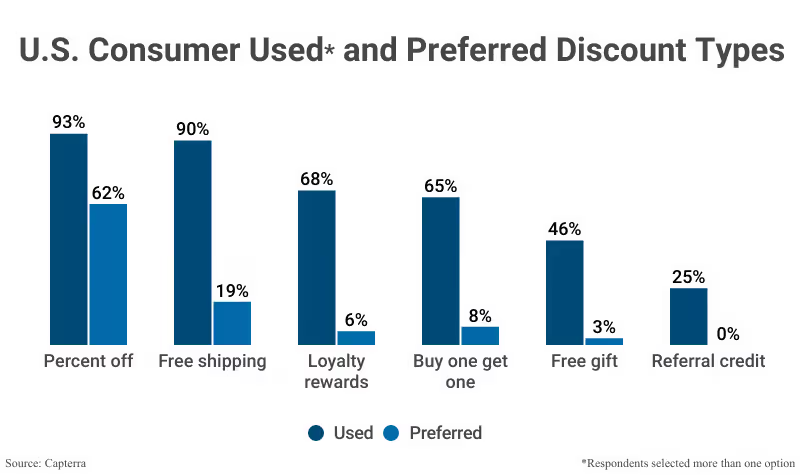
When managed with clear rules and good timing, coupons can shift behavior in several ways:
Retail teams working with short buying cycles or shifting margins often rely on these patterns to keep revenue steady across channels. A well-planned coupon campaign can redirect purchasing habits quickly and create a noticeable sales lift online and in physical stores.
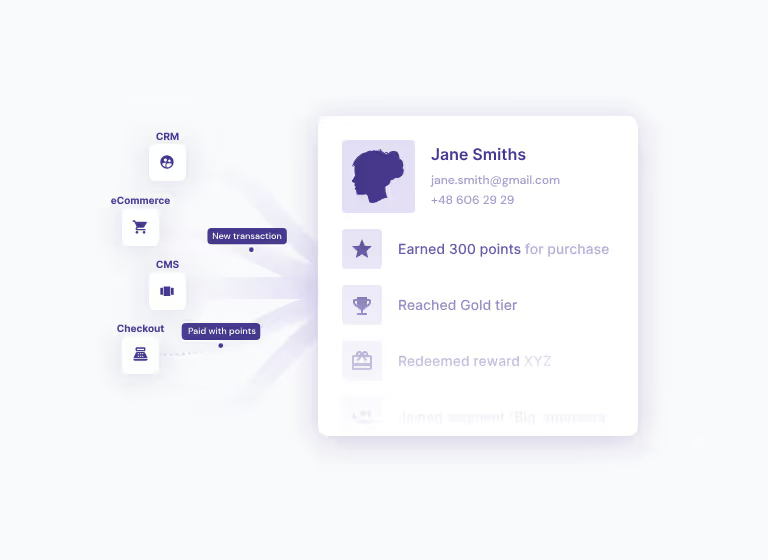
Modern coupon management software connects directly to loyalty programs, POS systems, CRMs, and eCommerce platforms, giving retailers a clearer picture of who is buying what and when.
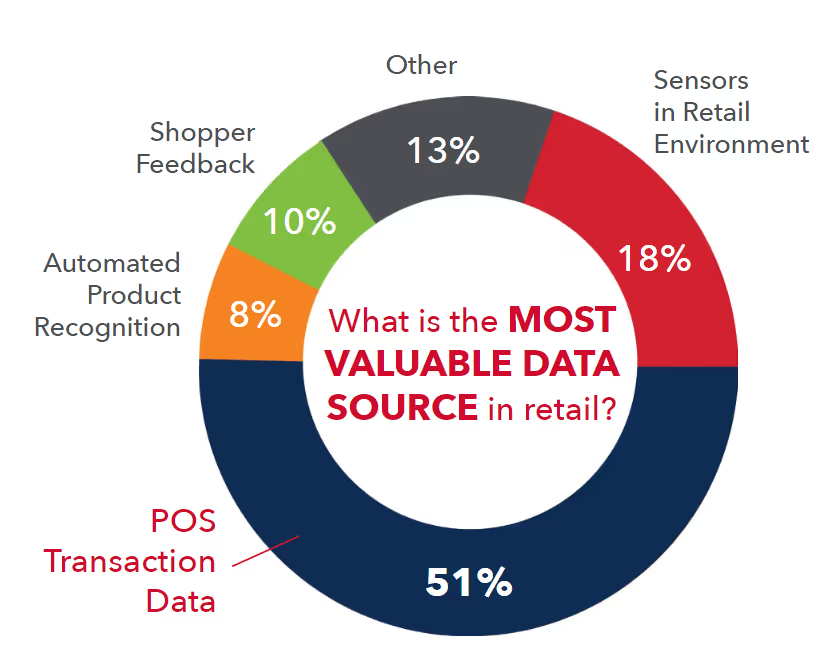
When you start using purchase history, shopping frequency, or preferred channels to issue digital coupons, you move from "blanket discounts" to precision targeting.
The result?
Customers receive offers they actually care about, your marketing efforts become more efficient, and you stop wasting budget on broad, generic campaigns.
Retail competition is simply brutal. New stores, marketplaces, and D2C brands appear every day, all fighting for the same customer attention. As you can tell, consistent and thoughtful coupon experiences matter.
Retailers using advanced coupon software can:
When customers repeatedly feel rewarded (not only at checkout but throughout their journey), they're far more likely to stay with your brand rather than test a competitor's offer.
Customers don't think in "channels." They browse online, buy in-store, pick up curbside, and reorder from an app, sometimes ALL in the same week. If your coupons only work in one of those environments, the experience breaks.
Advanced coupon software fixes this by enabling retailers to:
This eliminates one of retail's biggest frustrations: a coupon that "should work" but gets rejected.
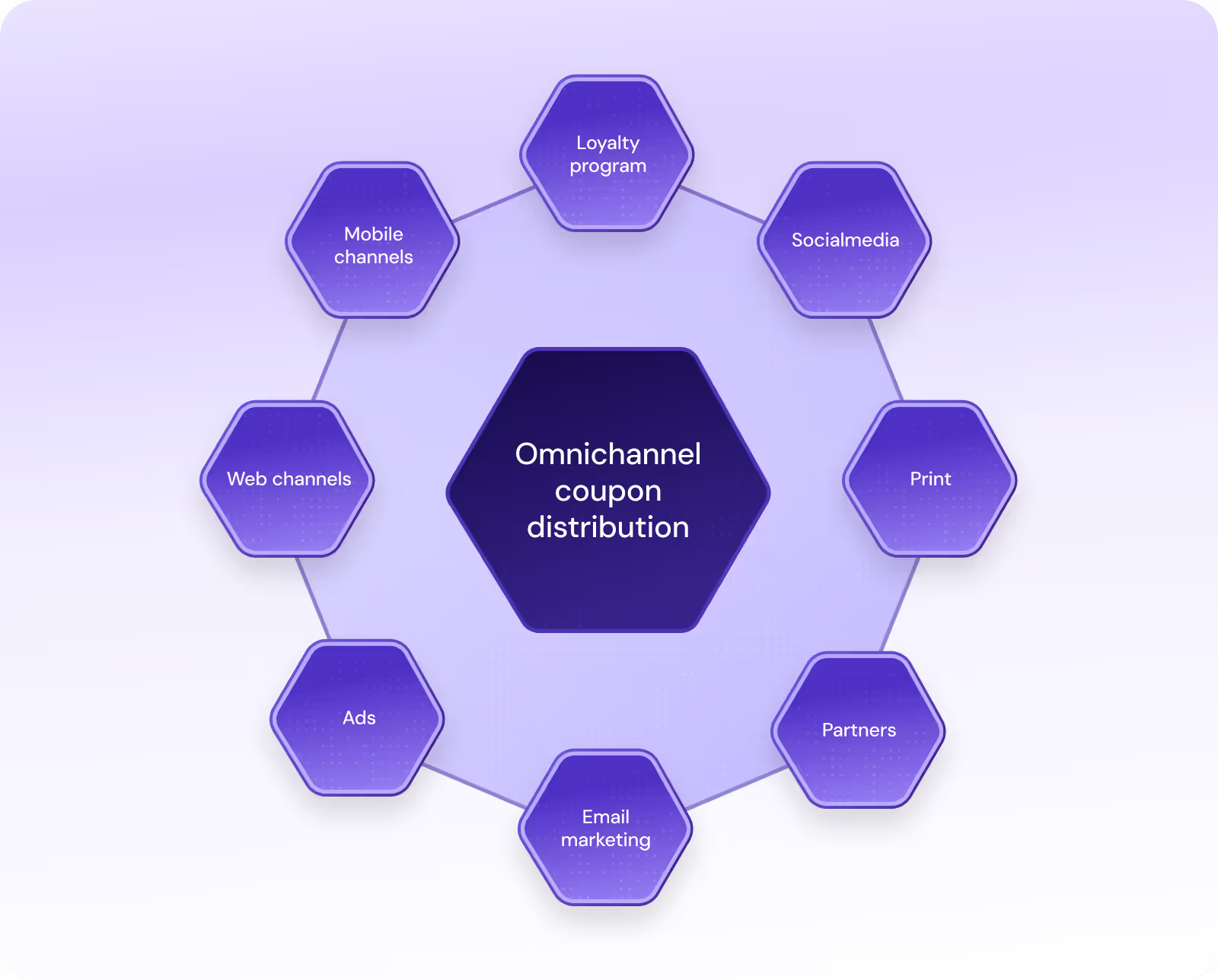
Looking to streamline coupon marketing and boost customer engagement? See the comparison of the best coupon management and marketing platforms for retail, highlighting must-have features.
🎥 Watch our webinar: "Retail loyalty programs: unlock the potential of omnichannel experience."
Open Loyalty is an API-first loyalty and promotion engine built for enterprise and mid-market retailers that treat coupons as part of a broader engagement and loyalty strategy. Rather than operating as a standalone coupon tool, Open Loyalty connects coupons with customer data, loyalty tiers, points, achievements, and behavioral triggers to support long-term customer relationships across digital and in-store channels.
The platform is designed for organizations with complex tech stacks that need flexibility, scalability, and control. Open Loyalty fits well into composable architectures, where coupons and loyalty mechanics integrate with existing ecommerce platforms, POS systems, mobile apps, CRMs, and data layers instead of replacing them.
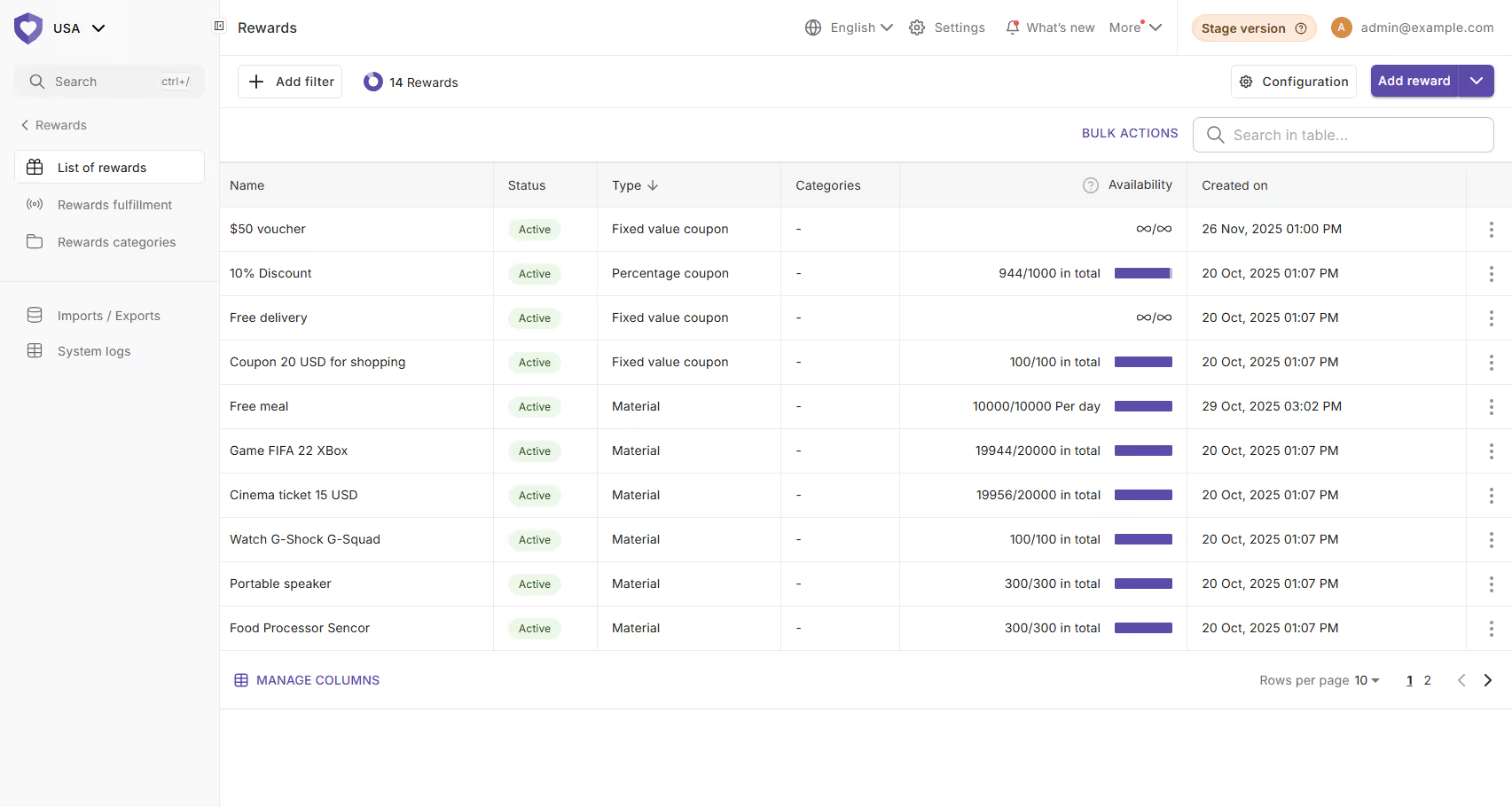
Open Loyalty clients appreciate the loyalty platform and its retail capabilities, saying:
👉 Read more opinions on Open Loyalty on G2 or Capterra.
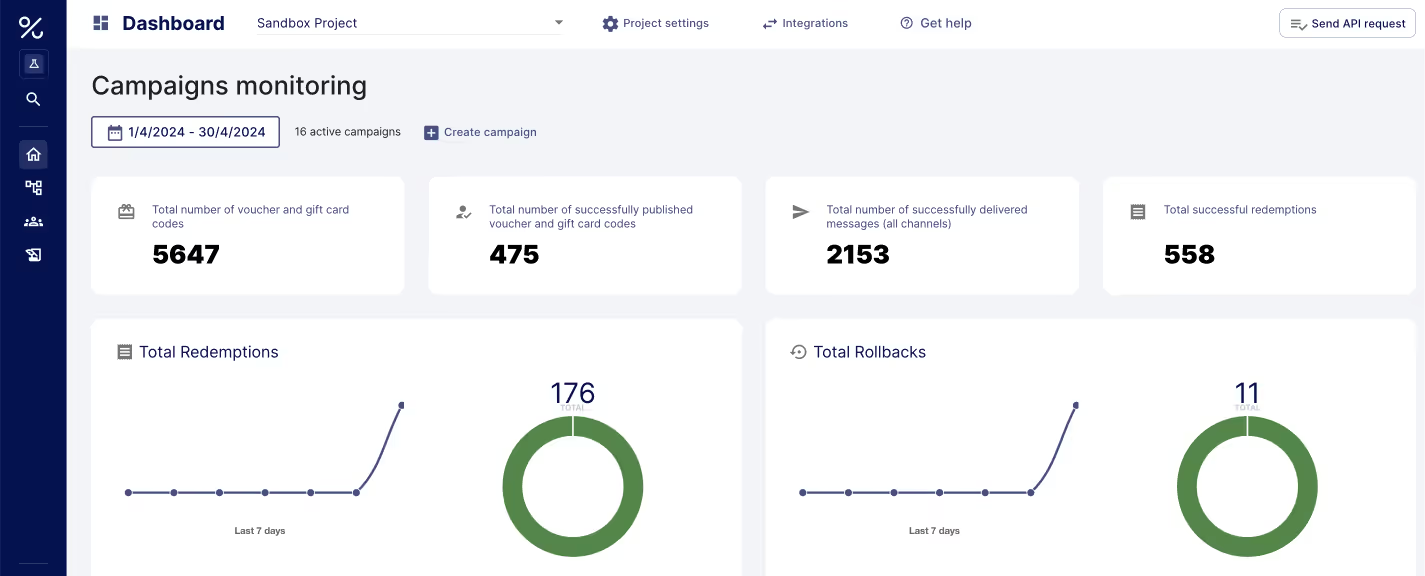
Voucherify is an API-based promotion and coupon management system used by retail and eCommerce teams that need programmable incentives. It's typically added as a standalone promotion layer within an existing tech stack, without extending into broader loyalty capabilities.
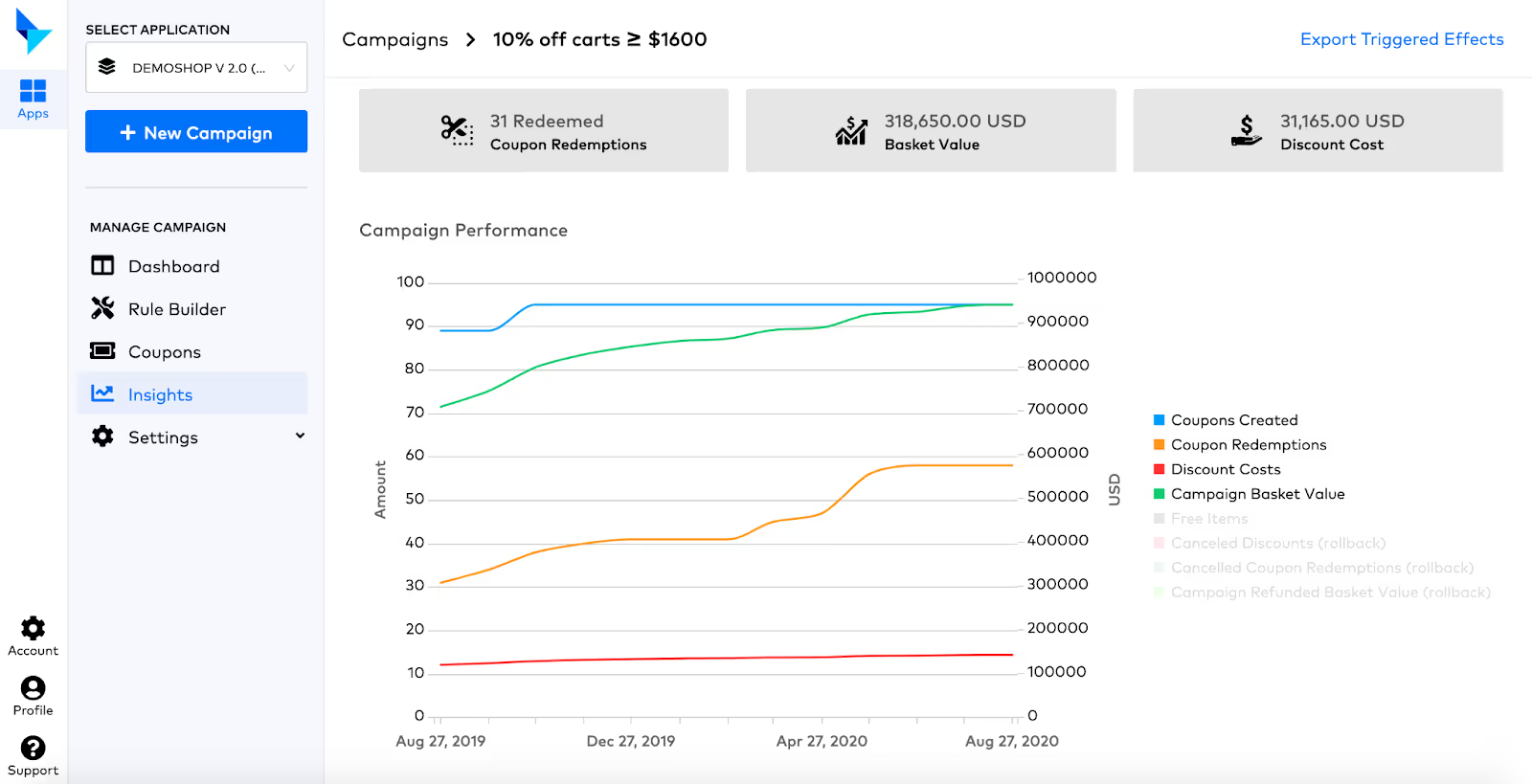
Talon.One is a promotion management system that supports discounts, coupon codes, loyalty points, referrals, and other incentive workflows. Retail teams typically use it to organize rules-driven promotions through a mix of APIs and a visual interface.
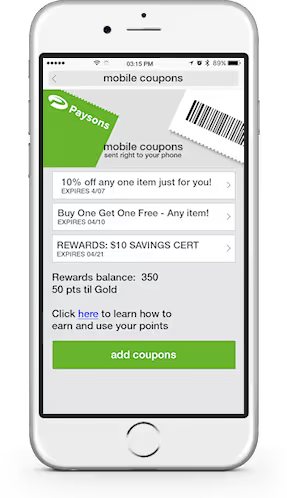
CodeBroker is a coupon and offer distribution platform used by retailers and service-based brands that rely on mobile channels for customer communication. The system centers on issuing single-use or limited-use codes through SMS, email, and mobile wallet formats.
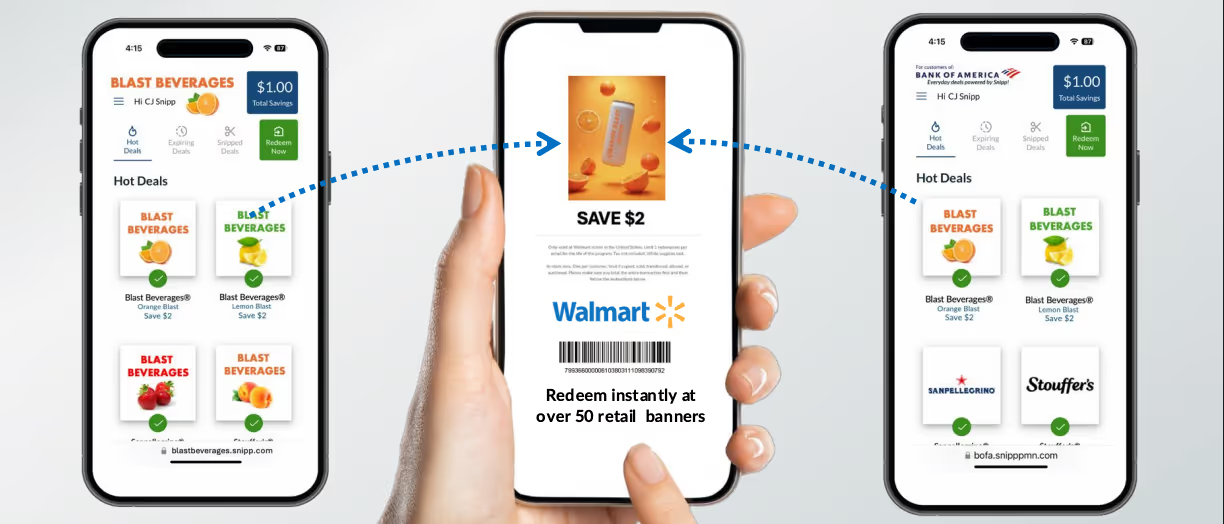
SnippOffers is a promotions and rewards system used by CPG brands, grocery chains, and retailers that run large coupon or rebate programs. It supports digital coupon formats as well as receipt-based validation across broad retail networks.
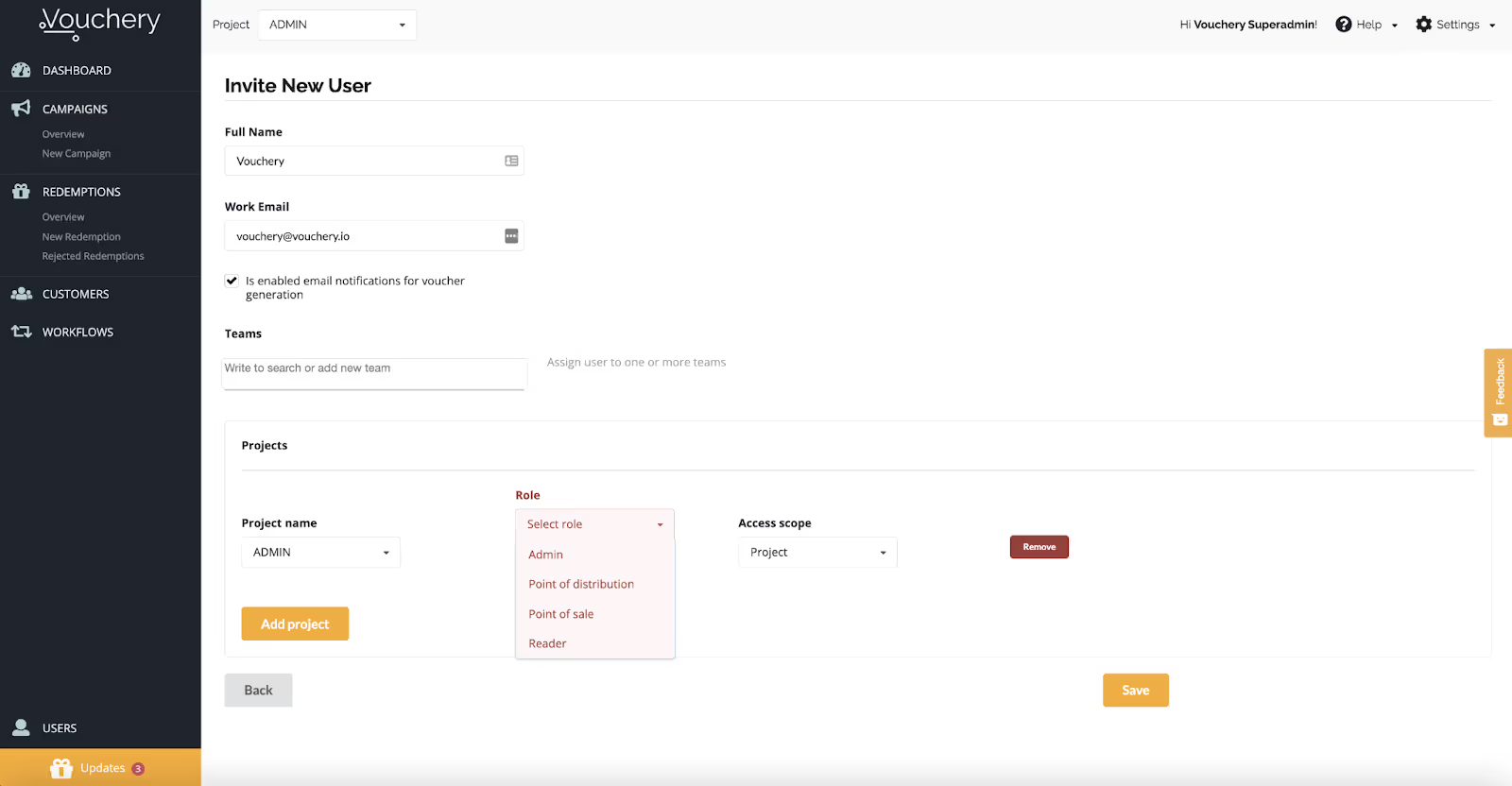
Vouchery.io is an API-based coupon and promotion engine used by eCommerce and digital-first businesses. It supports automated incentives across different steps of the customer journey through integrations with existing systems.
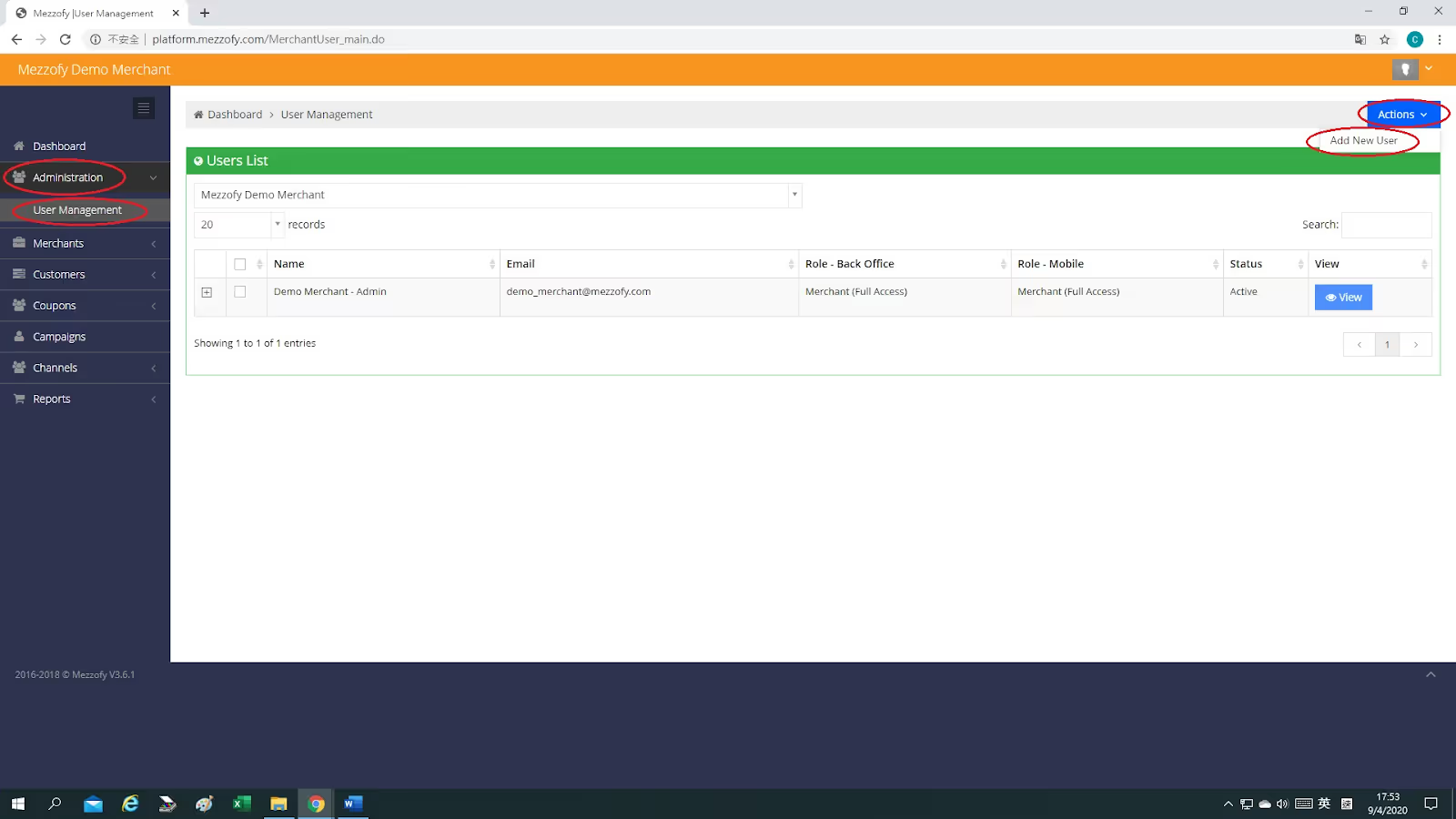
Mezzofy is a digital coupon management platform used by retailers, QSR brands, and businesses that distribute coupons and larger volumes of mobile-focused offers. It provides a no-code interface for building coupons and supports several digital delivery formats, including contactless options.
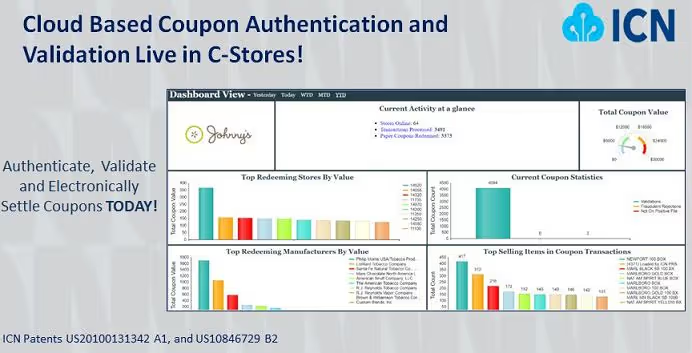
ICN provides coupon, offer, and trade-spend automation for retailers and CPG manufacturers. Its synQ platform connects with POS systems to deliver and validate coupons directly at checkout.
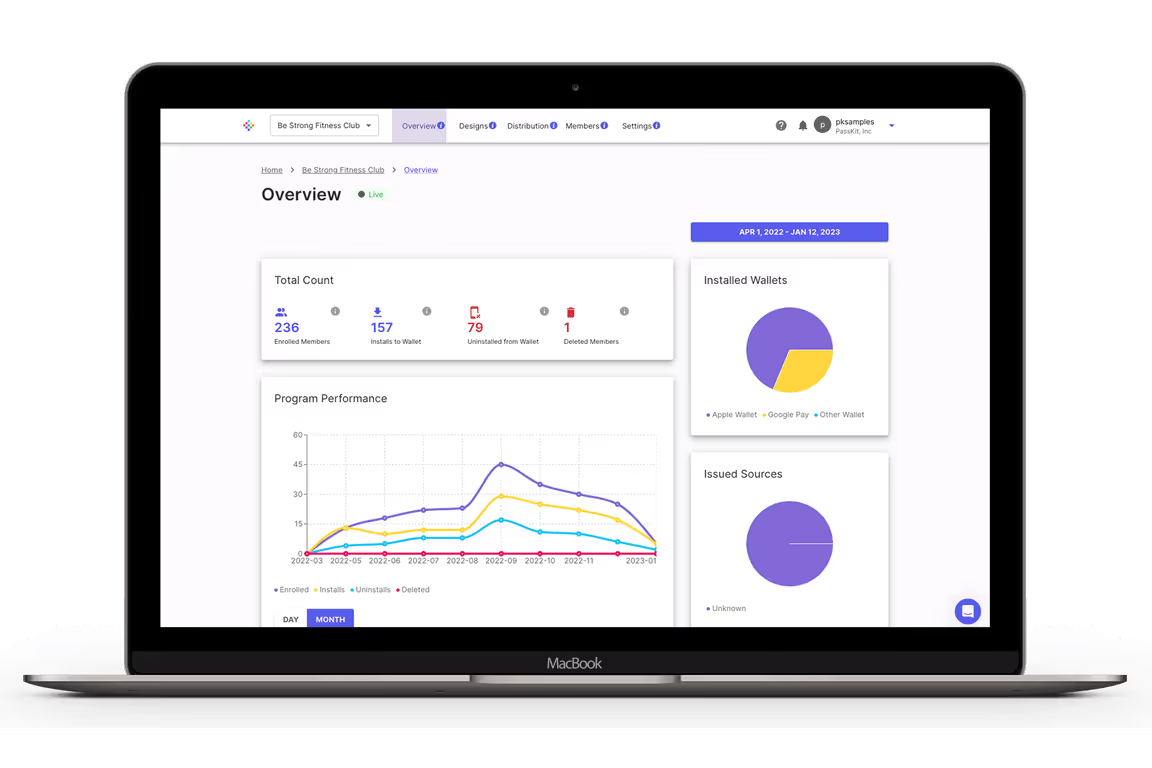
PassKit is a platform for creating and distributing mobile wallet passes for Apple Wallet and Google Pay. Retailers and QSR brands use it to deliver digital coupons, loyalty cards, or tickets directly to customer devices without implementing a broader promotion engine.
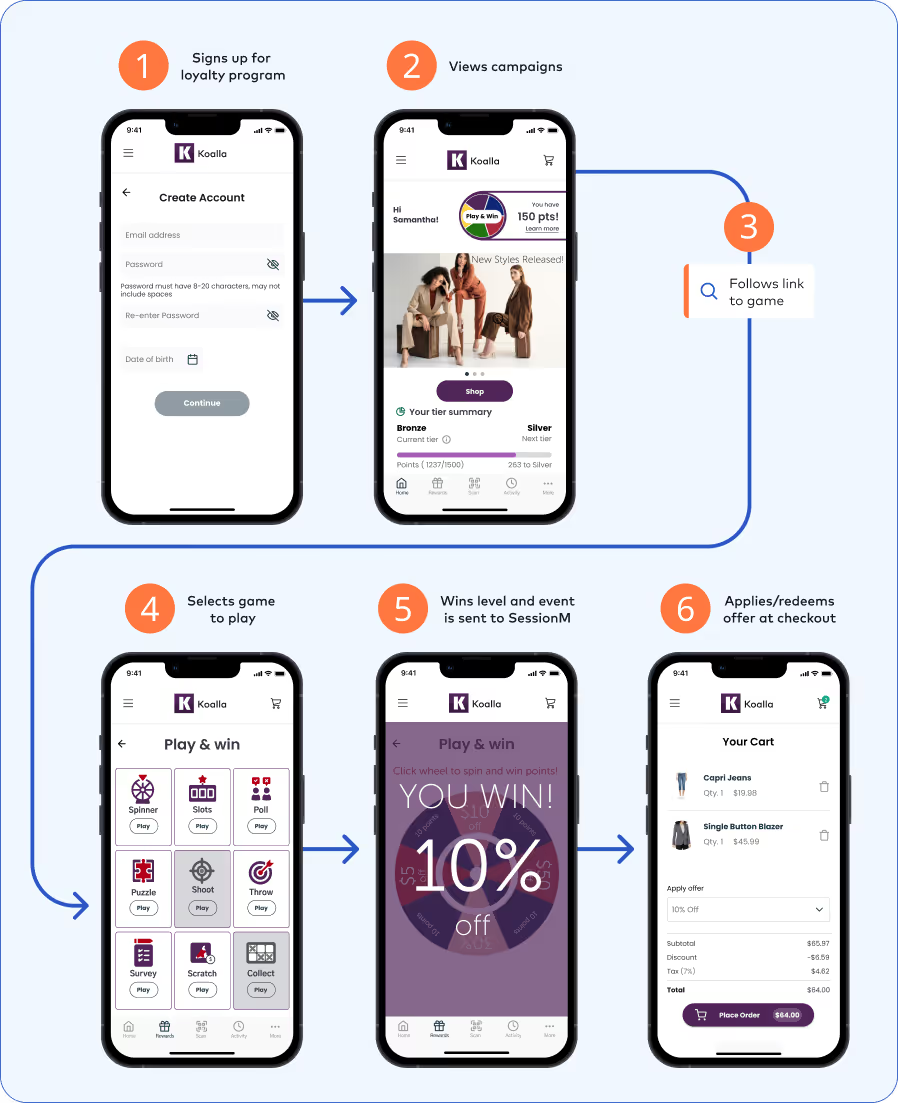
SessionM is a customer engagement and loyalty platform within Mastercard’s technology ecosystem. It combines customer data, offer management, and loyalty workflows, allowing brands to issue incentives across digital and in-store channels.
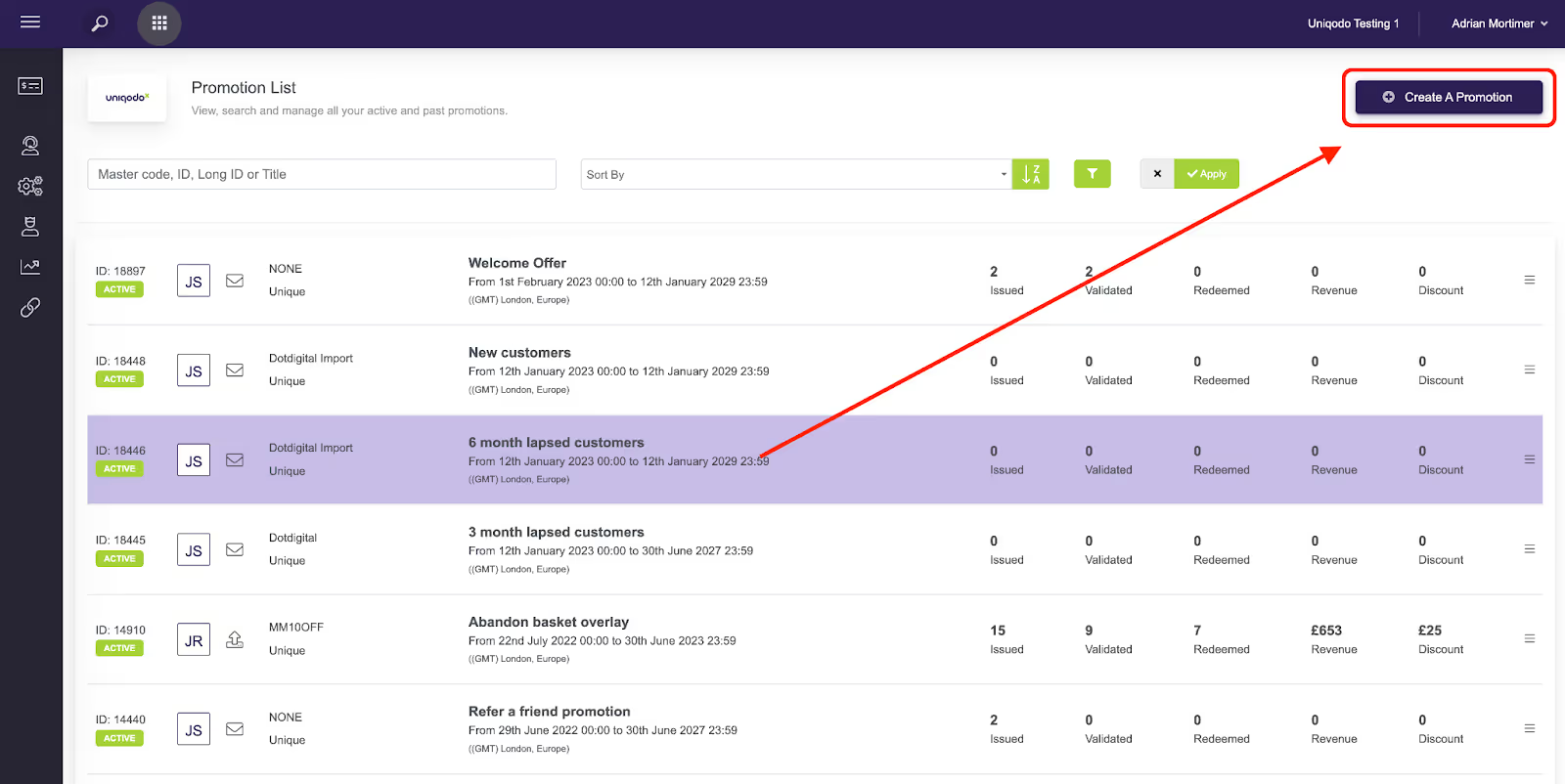
Uniqodo is a UK-based promotion management platform that combines a SaaS engine with optional managed services. It is used by retailers and eCommerce brands that need promotion workflows that sit outside the structure of standard coupon tools.
Retailers use coupons for more than short-term discounts. When managed well, they influence buying behavior, strengthen loyalty, and create steady engagement across stores, apps, and digital channels. But this only works when the underlying coupon software can keep up with how customers actually shop these days, moving between channels, switching devices, and expecting personalized offers in real time.
Modern retail teams need tools that do more than generate codes. They need systems that support omnichannel distribution, connect to loyalty data, prevent fraud, and allow marketers to adjust campaigns without heavy IT involvement. In other words: flexible, integrated, and built to scale.
Below, you can browse seven capabilities that matter most when choosing coupon software for a retail environment. These features strongly determine how quickly your team can launch campaigns, how accurate your targeting is, and how easily customers can redeem offers, online or in-store.
Retail teams run many promotions at the same time, like seasonal offers, clearance discounts, loyalty perks, and app-only deals. Without the right tool, this becomes messy fast. That's why modern coupon software has to be flexible, fast, and simple to use.
💡Read more about seasonal marketing campaigns and tactics that influence customer loyalty.
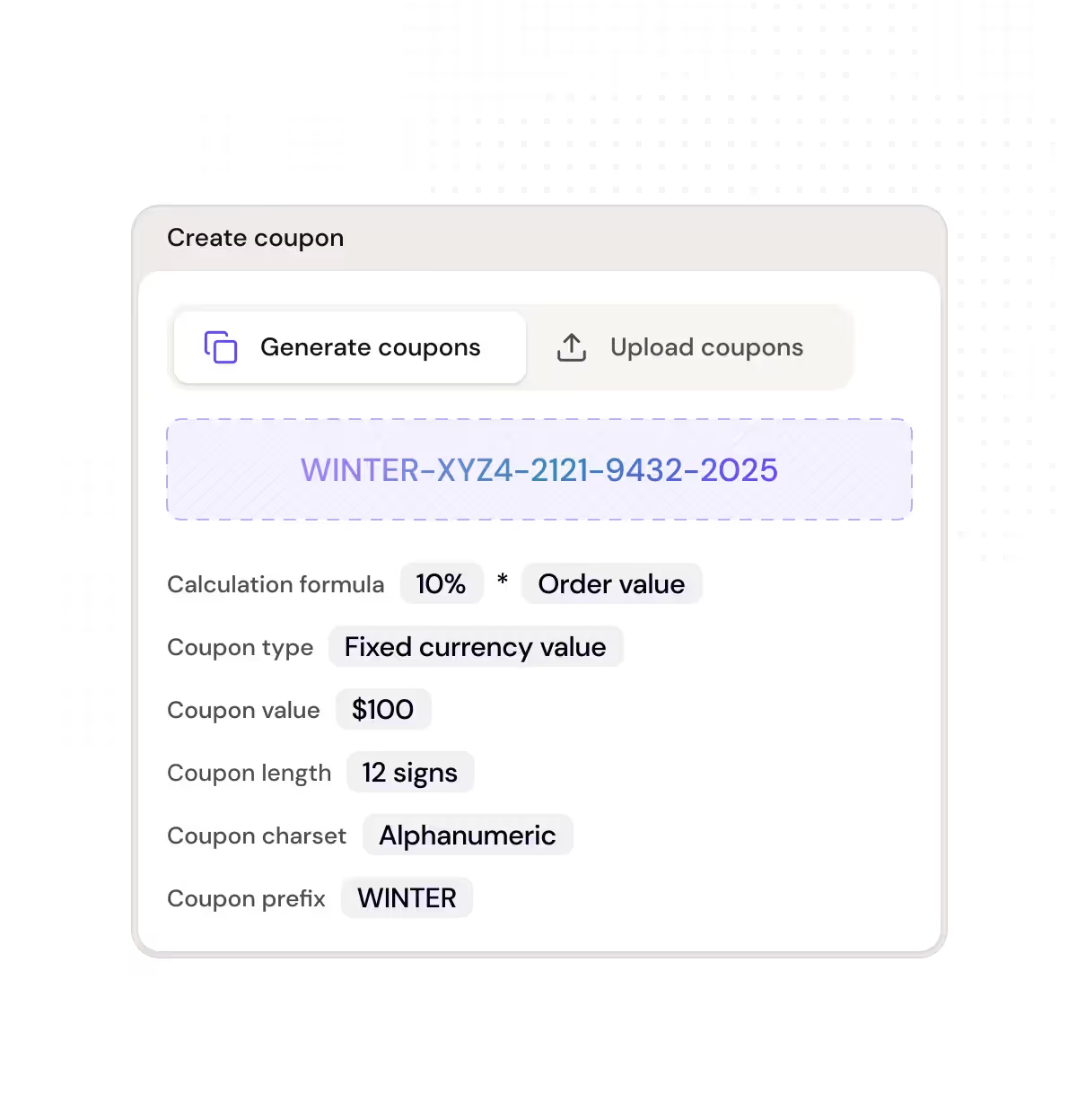
A good platform lets you create millions of unique coupon codes without worrying about overlaps or manual errors. Each code can have its own settings:
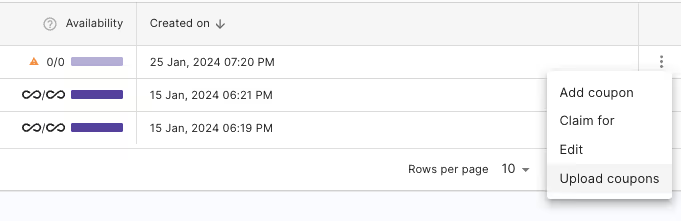
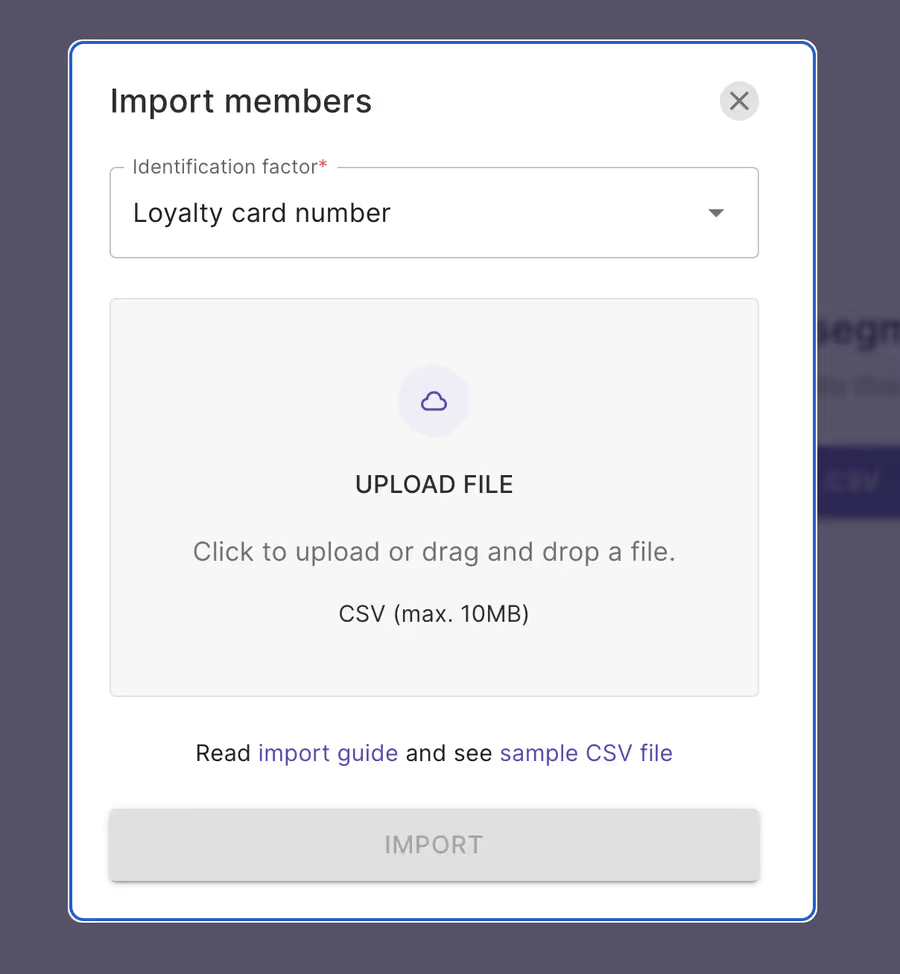
Bulk generation takes seconds. You can also upload third-party voucher batches if you work with partners or affiliates.
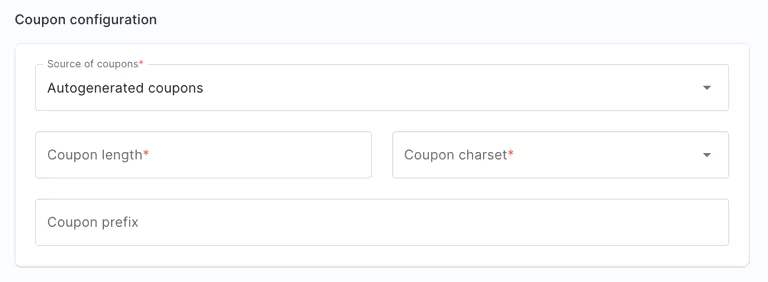
Most importantly, you don't need developers for every small change. Marketing and loyalty teams can set up new coupons or adjust existing ones directly in the dashboard with just a few clicks.
This matters in retail because promotions change constantly. The more self-serve the system is, the faster your team can react to market conditions, stock levels, and customer behavior.
Not every shopper should receive the same offer. And in retail, this difference matters. When retailers use customer data to shape their coupon strategy, campaigns become more relevant, more efficient, and far more profitable.
Modern coupon software lets you segment customers based on almost anything you track:
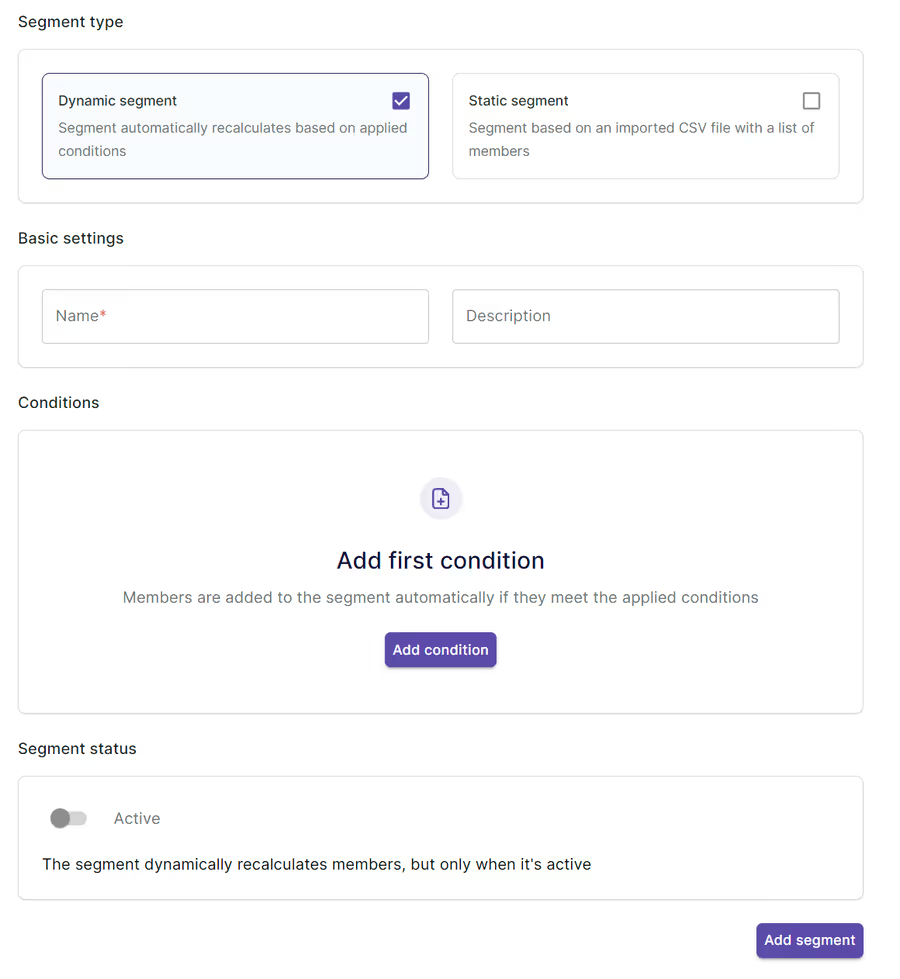
With these segments in place, you can deliver coupons that match real customer needs.
That might mean:
This is where digital coupons stop being "discounts for everyone" and become a tool for enhancing customer engagement and strengthening loyalty.
Personalization doesn't mean writing a customer's name inside a promo code (although you can). It's about issuing offers that feel intentional and relevant.
With advanced coupon tools, you can generate personalized, single-use promo codes tied to:
These codes help you avoid overspending on broad promotions and ensure customers receive coupons that are actually meaningful to them.
💡Read more on the 19 market-proven loyalty segmentation templates.
The impact is immediate:
Customers notice when a brand pays attention, and personalized coupon campaigns are one of the simplest ways to show it.
Retail shoppers move between channels all the time. They might browse on their phone, add items to a cart on a desktop, and then walk into a store to buy. If your coupons only work in one of those places, the experience falls apart.
Modern coupon platforms fix this by making distribution completely channel-agnostic.
You can send coupons through:
Customers get to choose how they want to receive and redeem offers, which naturally boosts engagement.
Mobile coupons that fit into everyday online shopping. Mobile coupons have become the default for many customers. They're fast, easy to access, and work well for in-store shopping.
With the right system, you can deliver:
This makes coupons feel less like "extra admin" and more like part of the natural shopping flow.
One campaign, all channels with consistent rules. One of the biggest wins of advanced coupon software is unified redemption logic.
A customer shouldn't have to wonder if a coupon they got through email can be redeemed:
With unified rules, everything just works.
💡Read more about loyalty program email examples for different business scenarios.
A single coupon campaign can run across multiple channels but still follow one set of rules, so the same value, same expiration, same product eligibility. No confusion for the customer, no operational headaches for store teams. The consistency is what turns coupons from "promotion chaos" into a reliable engagement tool across your entire retail network.
See what's working the moment it happens. Retail promotions move fast. A coupon that performs well at 10 a.m. might slow down by the afternoon, and a new channel might suddenly start outperforming your usual ones. That's why real-time tracking is essential!
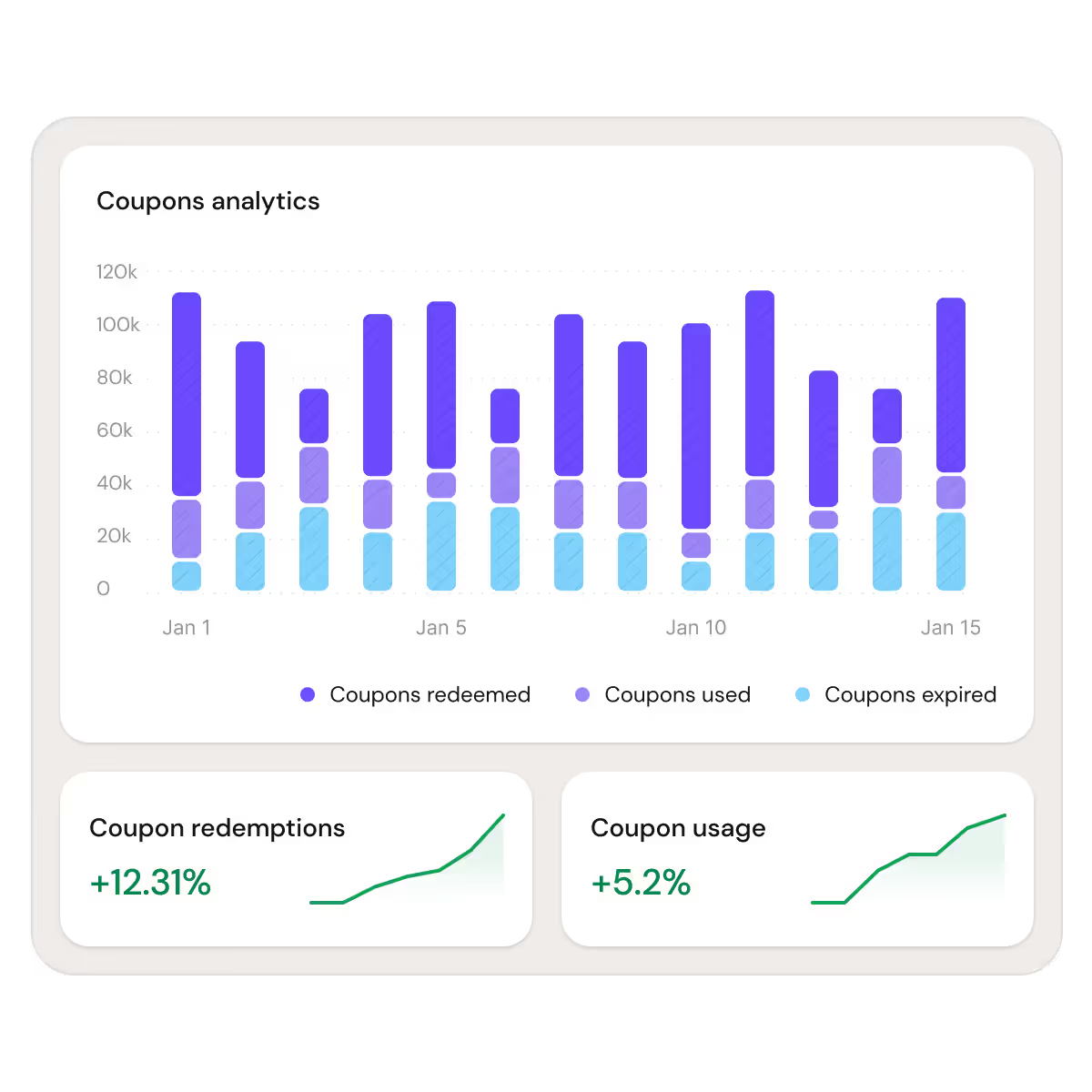
Modern coupon software gives you an immediate view of:
Dashboards make everything easy to interpret. You can spot trends before they fade, cut underperforming campaigns, or boost the ones that are gaining traction. It's a level of agility that just isn't possible with weekly or monthly reports.
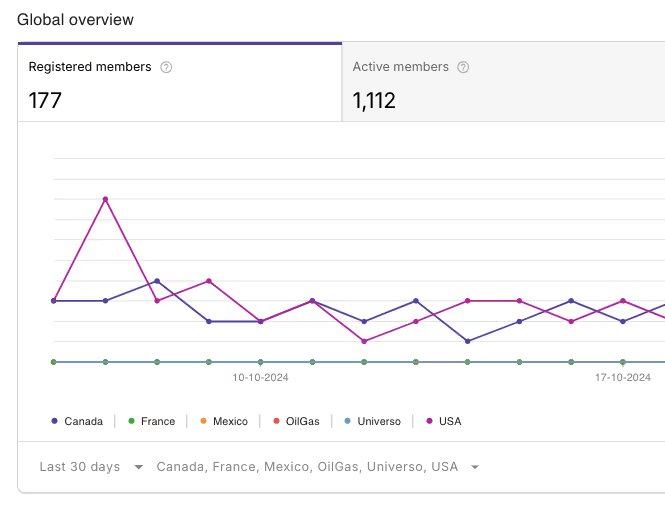
Understand customer behavior (not just coupon usage). Redemption numbers are helpful, but the real value comes from seeing who redeems what and how that behavior affects sales.
Advanced analytics let you break down results by:
This helps you answer bigger questions, such as:
With those insights, ROI becomes much easier to measure. You can stop guessing which campaigns work and start building promotion strategies based on actual customer behavior.
Retailers don't have time to push every promotion manually, and customers don't wait for someone to click "send." That's why automation is such a critical part of modern coupon management.
With advanced coupon software, you can automatically issue coupons when customers take certain actions, or when they don't. For example:
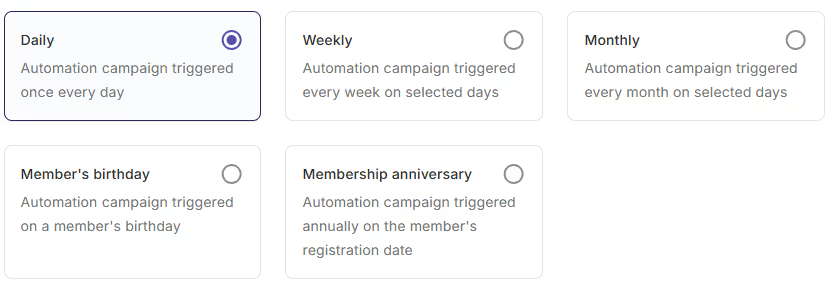
These automated triggers help you reach customers at the exact moment they're most likely to engage. And because it all runs in the background, your team stays focused on strategy instead of administration.
Scale coupon campaigns with CRM, email, and SMS integrations. Coupons become even more powerful when they're connected to your broader marketing stack. By integrating your coupon platform with tools like:
You can do the coupon distribution at scale, automatically, and with consistent logic across channels.
For example:
This kind of automation ensures your promotions feel timely, relevant, and consistent across every touchpoint, while massively reducing manual effort for retail teams.
Security and fraud prevention are essential in retail coupon management. When campaigns run across multiple channels and reach large customer bases, even small vulnerabilities can quickly lead to budget loss. That's why modern coupon platforms include built-in protections that keep promotions safe without slowing down your team.
A strong system lets you generate single-use or personalized codes, apply redemption limits per customer, and set campaign-level budget caps. These controls stop people from sharing coupons publicly, reusing them multiple times, or taking advantage of offers that were meant for a specific audience. Retailers get the flexibility to launch generous promotions while still keeping full control over how those discounts are used.
Real-time validation adds another layer of protection. Every time a coupon is redeemed (like scanned at POS or applied during online checkout), the system instantly checks its eligibility, expiration date, and usage history. If something doesn't match the rules, the coupon is rejected on the spot. You can prevent accidental misuse, protect margins, and keep coupon campaigns consistent across all your channels.
Monitoring tools help you spot unusual behavior early. Spikes in redemptions, repeat attempts from the same customer, or unusually high activity from a specific store or region can trigger alerts. Your team gets more time to investigate and, if needed, pause or adjust a campaign before it impacts your budget.
With these safeguards in place, retailers can confidently run large-scale coupon campaigns, knowing that every code behaves exactly as intended and that the platform has their back when something looks off.
💡 Find out about loyalty fraud and how to prevent loyalty program abuse.
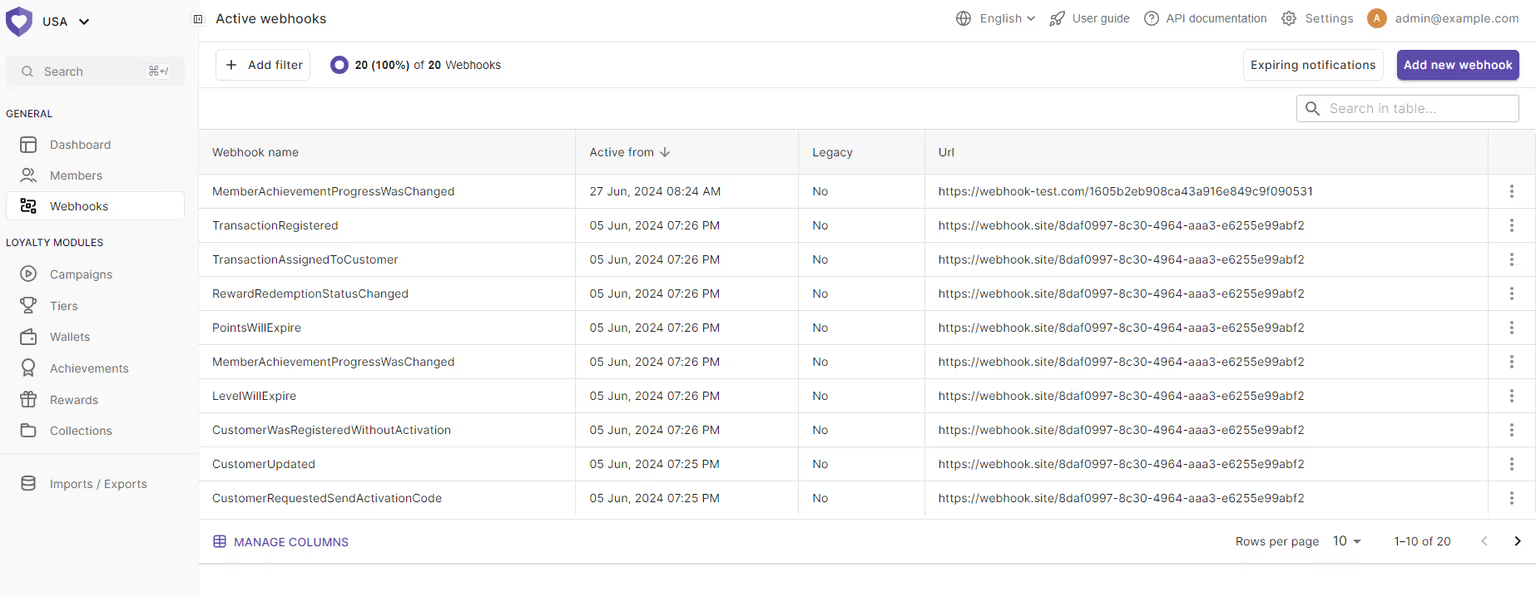
Modern coupon systems gain real strength when they connect smoothly with the wider retail stack: eCommerce platforms, POS networks, CRMs, loyalty apps, and marketing tools. APIs help with that, and webhooks add another layer by sending real-time updates whenever a coupon event takes place.
A setup that combines both approaches allows teams to create, issue, and redeem coupons directly in the tools they already use. A coupon generated in the loyalty platform can appear in a customer's app right away, get redeemed at the POS shortly after, and show up in the CRM timeline automatically. Webhooks pass each event across systems the moment it occurs, keeping the entire setup aligned without extra manual tasks.
Event updates cover actions such as coupon issuance, redemption attempts, expiration, or changes to campaign rules. These notifications feed customer profiles with accurate activity data, giving teams a clearer picture of how shoppers interact with offers across channels. Patterns start to emerge around redemption frequency, segment behavior, and how promotions influence basket size or shopping habits.
Stronger integrations turn coupons into a coordinated part of the broader retail workflow. Data stays in sync, campaigns behave consistently, and teams have a smoother foundation for targeted loyalty and promotion work.
💡Discover how to design an effective retail loyalty program for your business.
When retailers start comparing coupon tools, one thing becomes clear quickly: most platforms handle discounts, but very few naturally connect them with loyalty, customer data, and real-time engagement.
That's the top point where Open Loyalty differs.
Discover how it's built to run coupons as part of the bigger customer experience. Below, you can see the advantages that make this approach easier for retail teams on a day-to-day basis.
💡 Find out more about coupon software possibilities in Open Loyalty.
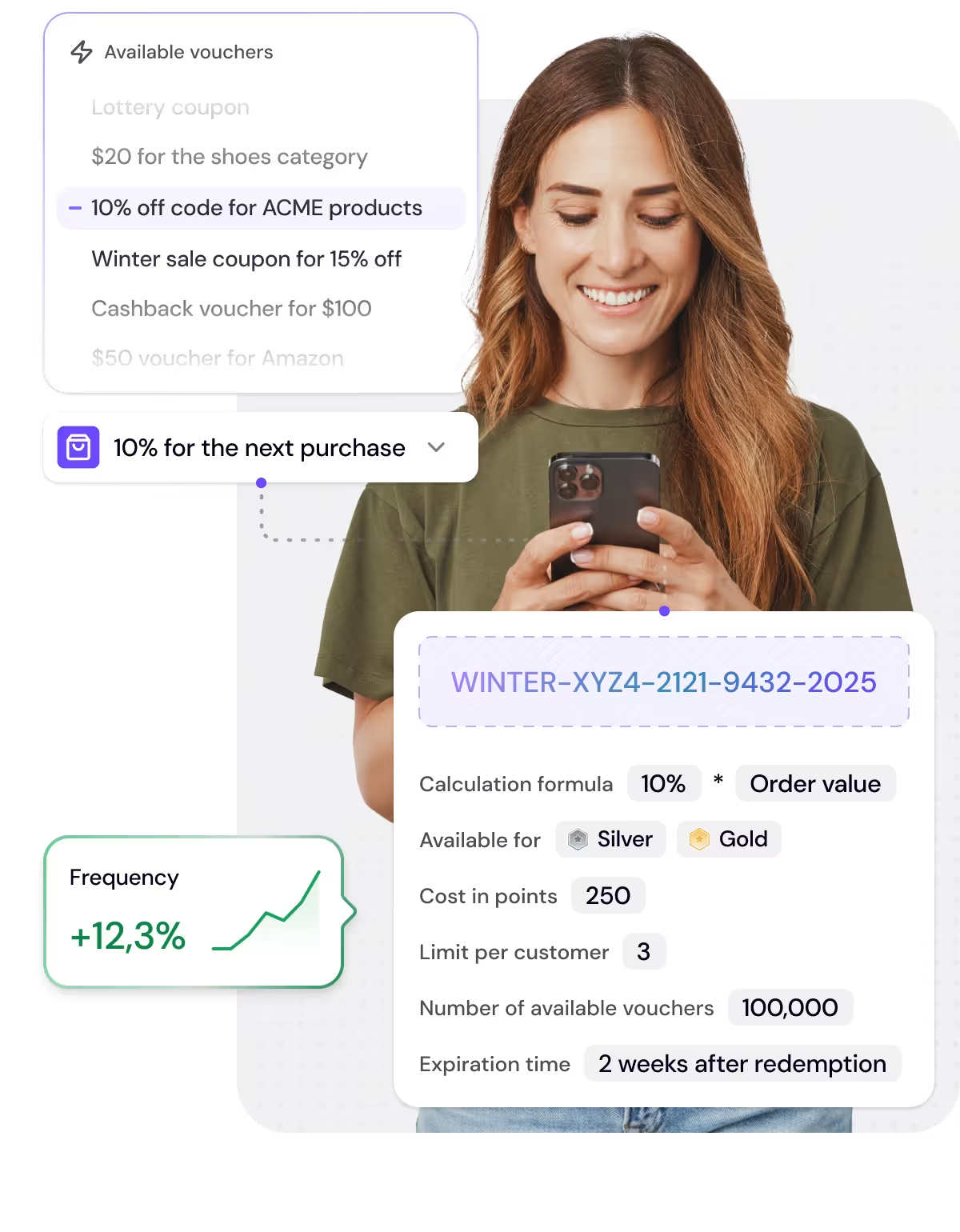
It helps retailers create, distribute, redeem, and monitor coupon codes across multiple channels, so teams can run coupon campaigns without relying on manual steps. The system supports tasks such as managing coupon campaigns, setting coupon limits, and issuing personalized coupon codes to keep offers relevant for different shopping journeys.
💡Find out more about the coupon software possibilities.
A coupon management system controls the full lifecycle of a promotion, from creation to coupon delivery and redemption. Retailers use it to run promotional campaigns, track customer behavior or customer satisfaction, and deliver targeted discounts to specific customer segments or broader audiences across online stores and physical locations.
Digital coupons are easier to adjust and measure. They allow retailers to engage customers with exclusive coupons, track activity in real time, and guide shoppers toward offers that match their interests. Many teams use digital formats to encourage repeat purchases and build customer loyalty through ongoing incentives.
Consumer-facing tools such as Honey, RetailMeNot, and Capital One Shopping help shoppers save money during checkout. Retailers usually focus on systems that support personalized campaigns, coupon strategy, and direct targeting, rather than public coupon-finder apps.
Apps like Ibotta, Fetch, and Coupons.com are popular among shoppers and draw many users who look for exclusive discounts each week. Retailers connect these apps to their in-house systems so customers can redeem offers easily across multiple channels.
APIs and webhooks link coupon events directly with checkout systems. When a customer enters a code, the system validates it instantly, applies any coupon limits, and updates records for later reporting. It can help retail teams understand which specific customer segments respond to a particular offer.
Fraud controls cover single-use codes, customer-level limits, expiration settings, and validation checks. The platform can flag suspicious activity tied to coupon fraud, such as repeated attempts from the same account or sudden spikes in redemptions.
Coupons can be tied to loyalty activity, such as milestones, tier progress, or visit frequency. Retailers often issue exclusive coupons to target specific customer segments, guide shoppers along the loyalty journey, and support customer acquisition efforts through first-purchase incentives.
Choosing the right platform depends on how your retail model works, how broad your campaigns are, and how you want promotions to connect with your POS, eCommerce stack, and marketing tools. Each option on this list supports a different setup. A grocery chain may prefer a POS-focused system like ICN, while a fashion eCommerce brand might lean toward an API-first engine.
If you're shaping a loyalty strategy alongside your promotion flow, take a look at our Mobile Loyalty Implementation Checklist and Loyalty Program Benchmark Report. They offer practical guidance gathered directly from retail teams.
👉 When you want to explore how a combined loyalty and coupon engine can support your work, feel free to book a demo of Open Loyalty.
Loyalty experts can walk through real examples, show how coupons behave across channels, and help you see if this approach fits your plans for long-term retail growth.

API-first loyalty and gamification engine

Get a weekly dose of actionable tips on how to build and grow gamified successful loyalty programs!