Many loyalty programs fail not because of poor strategy, but because of poor integration. When a loyalty engine isn't properly connected to the CRM, POS, CDP, e-commerce platform, and mobile app, data gets siloed, personalization breaks down, and customers notice. The brands that get loyalty right – like Starbucks – treat it as a deeply integrated data ecosystem, not a standalone rewards tool. Building on API-first, event-driven, composable architecture is what makes those connections reliable at scale.

Most loyalty programs are built with clear strategic intent: the mechanics are considered, the rewards are tested, the business case is approved. Yet according to McKinsey, the single biggest challenge brands face is translating the complexity of loyalty and pricing integration into a simple, personalized experience for customers.
That gap between intent and delivery is, in large part, an integration problem. 71% of consumers expect personalized interactions – and 76% get frustrated when they don't get them, according to McKinsey. Meeting that expectation requires loyalty data to move reliably across every system a customer touches: the CRM, the POS, the CDP, the e-commerce platform, the mobile app. When those connections are missing or unreliable, personalization breaks down.
It's precisely this problem that API-first loyalty platforms like Open Loyalty are designed to solve – by making the loyalty engine a connectable, integrable component of the broader enterprise stack rather than a standalone system.
This article examines what it takes to build and maintain effective loyalty integrations across the core systems in the enterprise stack – and why the quality of those connections so often determines whether a loyalty program becomes a genuine growth engine.
The programs that consistently outperform their competitors share a common characteristic: they are deeply integrated, with Starbucks Rewards being the clearest illustration of this thesis.
As of Q1 fiscal year 2025, the program counted 34.6 million active U.S. members according to SEC – and that scale is inseparable from how the program is built. The mobile app, the POS, the personalization engine, and the data platform operate as a single interconnected system.
As we’ve seen over time, Starbucks Rewards members develop a routinized long-term relationship with our brand that increases both tickets and transactions. Additionally, we activated new capabilities within our proprietary Deep Brew data analytics and AI tool to identify and incentivize specific rewards members cohorts, as CEO Brian Narasimhan stated.
This statement highlights the strategic value of integration: loyalty becomes more than a promotional mechanism – it becomes a data-driven engagement engine that strengthens habits and deepens customer relationships.
Starbucks shows a broader principle: loyalty programs deliver their full value only when they are embedded within a company’s wider technology and data ecosystem. Seamless integration allows customer information to flow across touchpoints, making it possible to recognize behavioral patterns, personalize communications, and respond in real time.
Without that connectivity, loyalty platforms operate with an incomplete view of the customer. Programs may still function, but they underperform strategically: they know less about members than they should, communicate less precisely than they could, and adapt more slowly than modern customers expect.
Integration quality, therefore, is not a backstage technical detail. It determines how much of a loyalty program’s intended value actually reaches the customer – and ultimately, how much loyalty it generates in return. This impact becomes especially clear when examining the specific systems that a loyalty platform must connect with to operate as a true engagement engine.
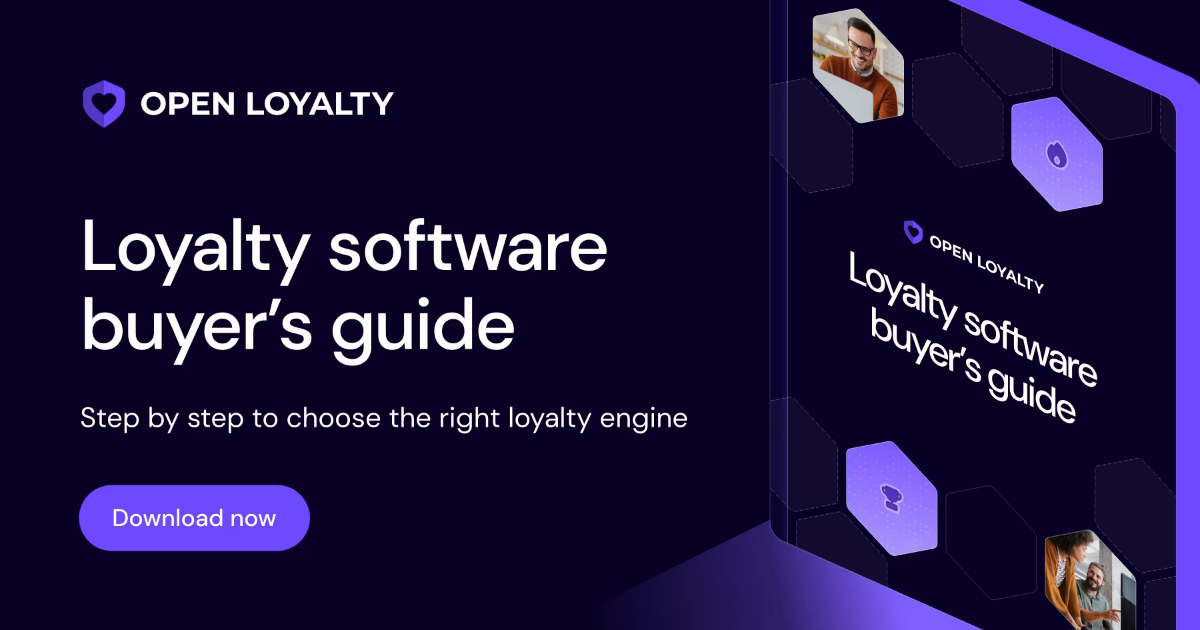
A loyalty engine sits at the center of a web of enterprise systems. Each integration point serves a distinct purpose – and together they create the real-time, omnichannel experience that modern customers expect.
Here is what each connection actually does, and what breaks when it is missing.
The CRM is the system of record for customer relationships. When a loyalty platform integrates with a CRM – Salesforce, HubSpot, or similar – loyalty actions flow into customer profiles as behavioral data, and CRM data informs loyalty segmentation in return. Sales and support teams gain visibility into tier status, recent rewards, and redemption history, making every customer interaction more informed. Automated workflows become possible: when engagement from a high-value member drops, the CRM can trigger a retention sequence using loyalty signals as the prompt.
Without this connection, the loyalty program and the CRM hold separate, partial views of the same customer.
The point of sale is the moment a transaction completes – whether at a physical checkout, a self-service kiosk, or an in-store terminal. For loyalty programs, it is one of the most critical data collection points in the entire customer journey. Every in-store purchase is an opportunity to recognize a member, award points, trigger a reward, or update a tier – but only if the POS system and the loyalty engine are connected and exchanging data in real time.
Retailers connecting POS and loyalty data across channels report up to 15% lower cost per purchase and nearly 20% higher incremental in-store revenue (Deloitte)
Without that connection, in-store transactions become invisible to the loyalty program. A customer who earns points online but receives nothing for an in-store purchase quickly notices the inconsistency. The program appears broken, even if it is technically functioning. This lousy customer experience is why POS integration is so consequential: it determines whether a brand can deliver a consistent loyalty experience across both physical and digital environments.
The technical challenge is significant here, as legacy POS systems often lack modern APIs or real-time data sync, forcing brands to rely on workarounds such as batch uploads, manual adjustments, or custom middleware.
A Customer Data Platform is a system that collects and unifies customer data from every touchpoint – purchases, app activity, email engagement, in-store visits – into a single, persistent member profile. For loyalty programs, this unified profile is what makes personalization meaningful rather than generic. Without it, the loyalty engine operates with a partial view of the customer: it knows what someone has redeemed, but not how they browse, what they've searched for, or how they behave across channels.
When a loyalty platform integrates with a CDP, loyalty events – points earned, rewards redeemed, tier changes – flow into that unified profile in real time. In return, the CDP feeds enriched behavioral and demographic data back to the loyalty engine, enabling it to make contextually relevant decisions: the right offer, to the right member, at the right moment. It is the mechanism behind meaningful segmentation, targeted campaigns, and personalization that actually reflects how a customer behaves.
Without this connection, loyalty data stays trapped inside the loyalty platform – generating value only within the program itself, rather than informing the wider marketing, analytics, and personalization infrastructure the business depends on.
For brands with a digital commerce presence, the e-commerce platform is where a significant share of loyalty-earning transactions occur. Integration requires real-time synchronization of points, rewards, and customer data between the loyalty engine and the commerce platform. At checkout, customers should be able to see available rewards, redeem points, and view tier benefits – all current, all accurate.
In headless commerce setups, the loyalty API serves the backend while the frontend renders rewards in the checkout flow and account pages independently. Personalization at this layer draws on purchase history and browsing behavior from the e-commerce platform to surface relevant offers – which is only possible when the two systems share data continuously rather than periodically.
When the connection is unreliable, the checkout experience reflects a stale or incomplete loyalty state: rewards that appear available but fail at redemption, points that take hours to credit, and offers that bear no relation to what the customer has actually purchased.
According to eMarketer mobile apps are now the primary loyalty touchpoint - 60% of loyalty program members prefer using it to access their programs. The app is where members check balances, receive personalized offers, respond to challenges, and redeem rewards.
Thus, technical requirements here are uncompromising: loyalty data must be current at all times. A balance that takes minutes to update after a purchase, or a reward that appears available but fails at redemption, erodes trust faster than almost any other failure mode.
When this layer is well integrated, the mobile app functions as a closed feedback loop: customer behavior triggers loyalty events, which trigger personalized communications, which drive the next customer behavior. When it is not, members experience delays, inconsistencies, and a program that feels unresponsive – regardless of how well-designed the underlying mechanics are.
The five integrations described above don't operate in isolation, and they don't function reliably by accident. Each one depends on the loyalty platform being built in a way that makes clean, stable, real-time connections possible.
The quality of integration is largely a consequence of architectural decisions made long before any system is connected.
Three principles define platforms that integrate well.
Together, these patterns form the technical ecosystem that makes the integrations described in this article reliable at scale.
Integration failures rarely announce themselves at launch. They surface gradually – in support tickets about missing points, in redemption errors at checkout, in personalization that feels generic despite months of data collection. By the time the pattern becomes visible, member trust has already taken a hit.
The good news is that most integration failures follow recognizable patterns, and the majority are preventable with the right architectural decisions and organizational alignment made early enough to matter.
Loyalty programs are ultimately only as strong as their connections. The strategic value of a well-designed program – the personalization, the real-time recognition, the habit-forming engagement loop – only reaches customers when the underlying systems are properly integrated. That's not a technical footnote; it's the condition that determines whether the program delivers on its promise.
The good news is that integration quality is a choice, not a constraint. Platforms built on API-first, event-driven, composable architecture make reliable connections achievable and maintainable. The brands that treat integration as a strategic priority – not an IT afterthought – are the ones that turn loyalty programs into genuine growth engines.
The technology to do this well exists. The question is whether the organization is aligned around making it work – across IT, marketing, commerce, and leadership. That alignment, more than any single platform decision, is what separates loyalty programs that perform from those that merely exist.
Not necessarily from day one. Start with the integrations that match your primary channels, if you're mostly digital, e-commerce and mobile matter most.
But gaps in any integration will eventually show up as inconsistencies that members notice, so treat the others as a roadmap rather than optional extras.
POS. Legacy systems often don't support real-time APIs, so brands end up relying on batch uploads – meaning points appear hours after a purchase. It's one of the fastest ways to lose member trust at the moment that should feel most rewarding.
Yes. A well-built loyalty platform exposes APIs that connect to major CRMs like Salesforce or HubSpot without replacing them.
The loyalty engine feeds behavioral data into existing customer profiles rather than competing with them.
Directly. If your loyalty engine can't share data with your marketing platform or CDP, campaigns run on incomplete profiles.
Personalization suffers, offers miss the mark, and you end up spending more to drive less engagement.
Ask whether the platform is API-first with documented, stable endpoints.
Check how it handles real-time sync, what happens when a downstream system fails, and whether it's been integrated with the specific tools already in your stack.
Ongoing. Systems get updated, new touchpoints are added, and data volumes grow. Integration isn't a launch task – it's infrastructure that needs monitoring, maintenance, and occasional re-architecture as the business evolves.

API-first loyalty and gamification engine

Get a weekly dose of actionable tips on how to build and grow gamified successful loyalty programs!