Paid media has become more competitive, volatile, and unpredictable than it was just a few years ago. In display alone, the average cost per thousand impressions rose by about 47% year over year in Q2 2024, as brands shifted more budget into programmatic and social ads (PPC.land data). As customer acquisition has grown noticeably harder, loyalty software such as Open Loyalty, has returned to the forefront as a strategic growth lever.
Recent benchmarks show e-commerce CAC averaging around $70 - 80 per customer, depending on the category (Upcounting); in B2B and SaaS, CAC typically lands between $500 - 700; and in more complex segments, such as fintech or enterprise software, it often exceeds $1,000 per customer (Geneo SaaS CAC benchmark).
Against this backdrop, referral-driven growth and loyalty programs have shifted from “nice side project” to core growth infrastructure, as referred customers typically convert 3 - 5 times better than other channels and often generate 16% higher lifetime value, while being measurably more loyal than customers acquired via ads (Demandsage).
In other words: when acquisition budgets are under pressure, loyalty-powered referrals become one of the few levers that can improve both CAC and LTV at the same time.
Yet most referral programs underperform. The gap between “we have a referral widget” and “referrals drive a meaningful share of growth” comes down to "loyalty design": reward structures aligned with real product value, qualification rules that protect quality, frictionless sharing mechanics, and tight integration with the broader loyalty stack.
In the rest of this article, we’ll dissect some of the most innovative loyalty referral programs - from product-native models like Dropbox to aspirational status plays like Tesla - to extract practical blueprints for loyalty and growth teams who want referrals to be a primary, not peripheral, engine of sustainable growth.
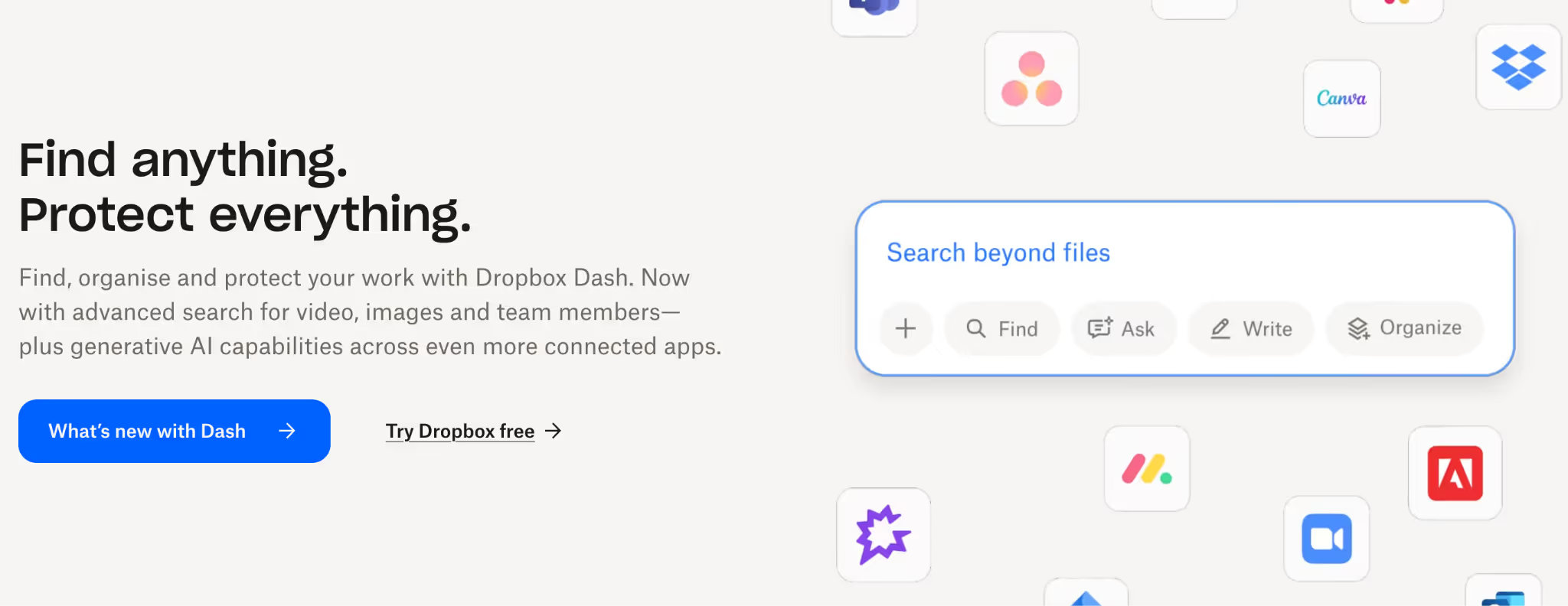
Dropbox’s referral program is fully embedded into the product - instead of asking users to “join” a referral program, Dropbox automatically assigns every user a unique referral link at signup, and that link is surfaced naturally throughout the product experience - in onboarding flows, account settings, and file-sharing menus.
When a user invites a friend, the recipient simply signs up and installs the Dropbox client; once that happens, both accounts instantly receive additional storage.
The reward directly enhances the product’s core utility, and because storage accrues with each successful referral, users are encouraged to invite multiple friends until they reach their cap.
The entire workflow feels like a native feature rather than a marketing layer, enabling low-friction, high-velocity viral spread.
Key features:

Uber designed its referral ecosystem to grow both sides of its marketplace at once - a challenge few platforms face at scale.
Recognizing that riders and drivers behave differently, the company built two dedicated referral paths tailored to each group’s motivations. Riders can share a simple invite code that unlocks ride credits for both parties once the friend takes their first trip; drivers participate in a more robust flow: they earn a cash bonus only after the new driver completes a qualifying number of rides, proving they’re committed and contributing value.
To keep acquisition efficient, Uber continually adjusts reward amounts based on local market maturity, offering larger incentives where it needs to break into new regions and dialing them back as network effects strengthen.
Key features:
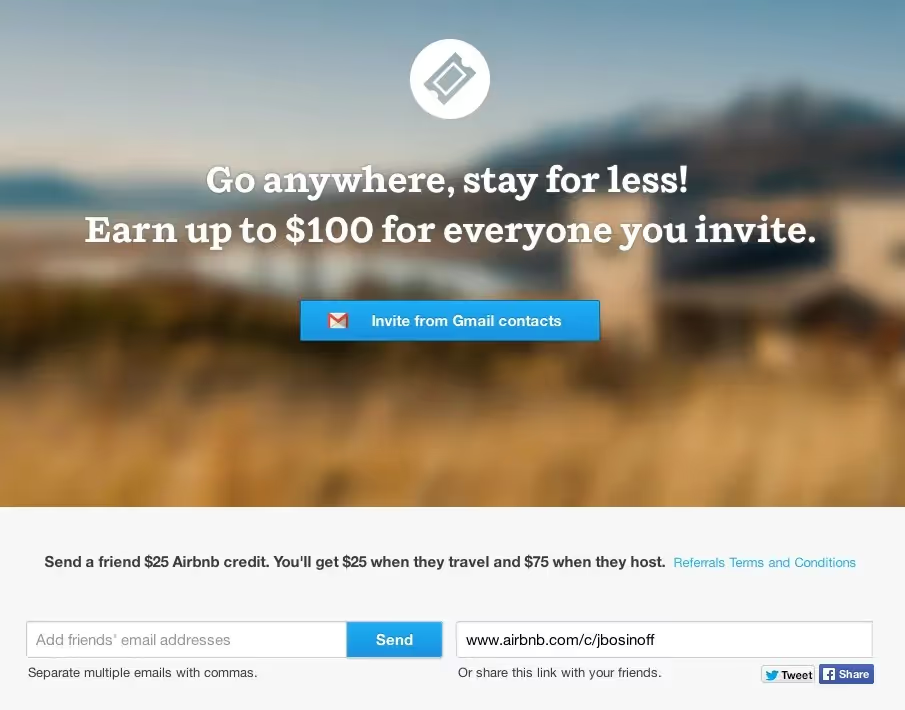
Airbnb’s referral program capitalizes on the inherently social nature of travel and the distinction between its two core user types: guests and hosts.
The platform runs two tailored flows: guests can invite friends and earn travel credits once the friend completes their first stay, while hosts can refer new hosts and earn credits when the new host completes their first successful booking.
Airbnb embeds referral prompts into natural satisfaction moments - after a highly rated stay or a successful hosting experience - ensuring referrals happen when emotional affinity is highest. Rewards are issued as platform-bound travel credits, reinforcing repeat usage and keeping value locked within the Airbnb ecosystem.
Key features:
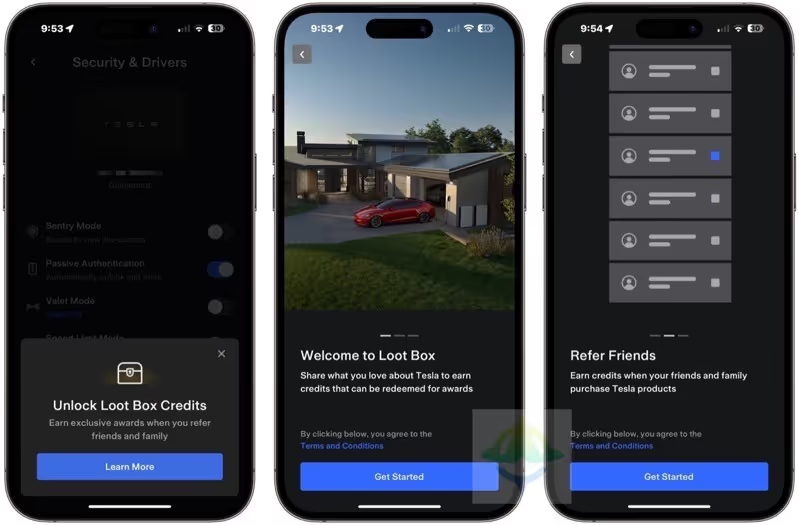
Tesla’s referral program serves not only as a customer acquisition mechanism but also as a community-building engine centered on status, exclusivity, and enthusiasm.
Tesla owners receive unique referral codes they can share with prospective buyers, and when a purchase is made through that code, the referrer earns progress toward a tiered set of rewards. These range from exclusive factory tours and limited-edition merchandise to early access to new vehicles, and in some historical campaigns, even free cars for top referrers.
Tesla regularly refreshes reward structures and adds time-bound challenges, reinforcing a sense of scarcity and ongoing excitement.
The program leverages the loyalty and advocacy of deeply passionate owners and turns referrals into a prestige activity.
Key features:
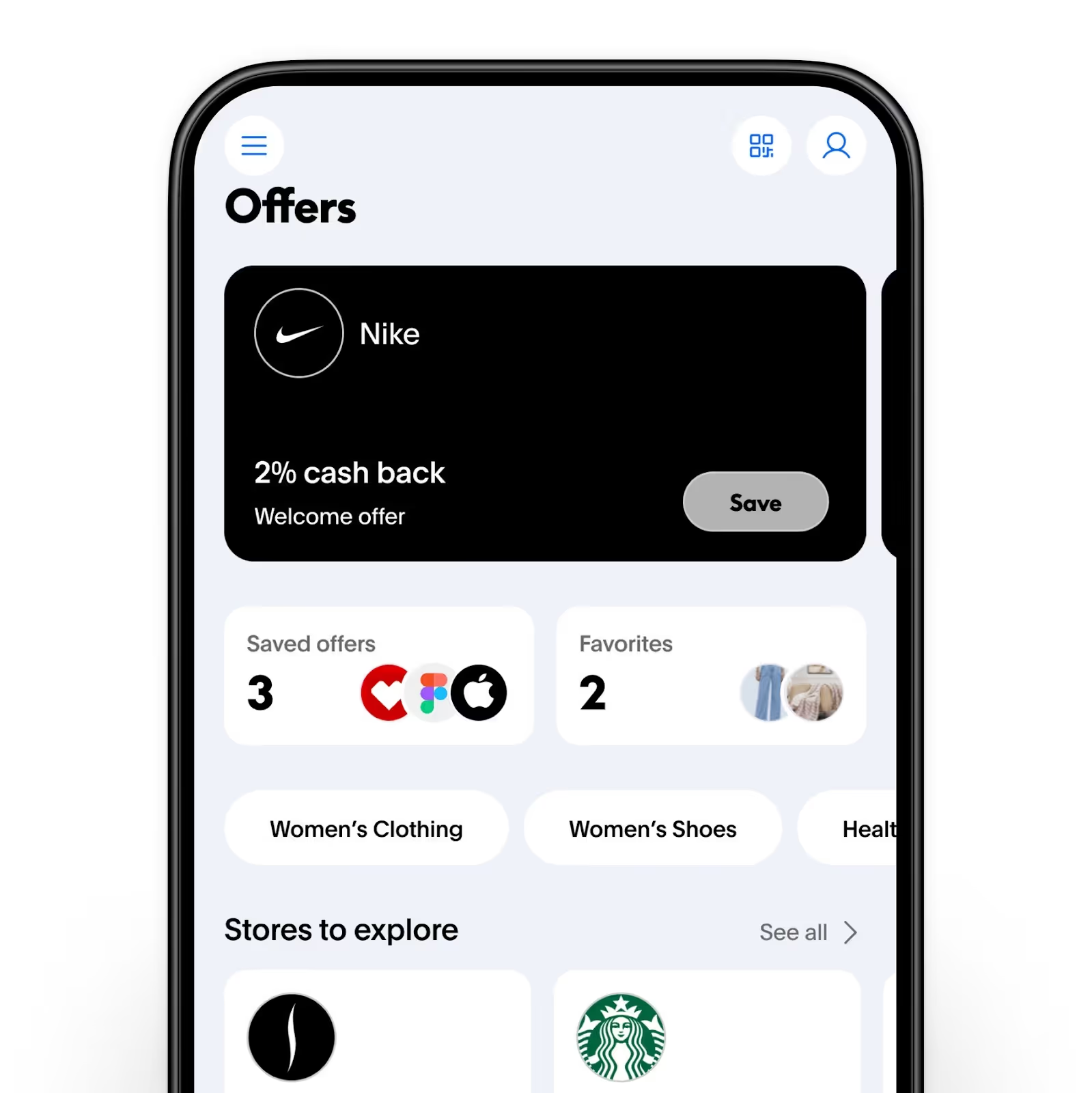
PayPal’s early referral program is one of the most aggressive in tech history, designed to blitzscale the platform during its formative period. New users received cash for signing up, while existing users earned additional cash for every friend they brought in, provided the friend linked a bank account and completed a qualifying transaction such as sending or spending a small amount. This structure ensured that referrals generated real, activated users rather than superficial signups.
Though the program cost the company tens of millions of dollars, the strategy paid off by establishing network effects that made PayPal the default online payments solution. As adoption grew, the incentive levels were strategically reduced to maintain profitability.
Key features:
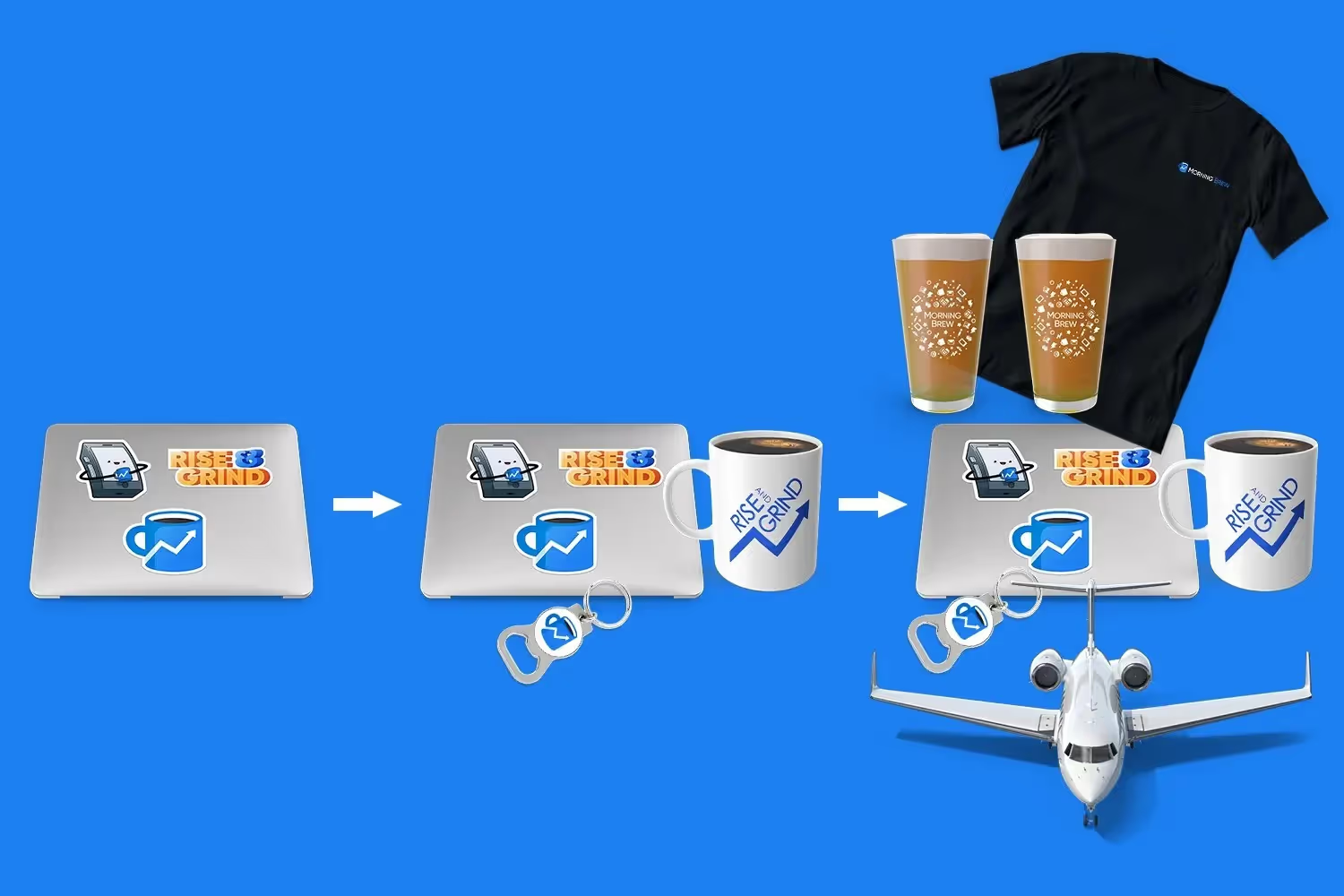
Morning Brew’s referral system is structured like a game, integrated directly into the newsletter format and designed to turn everyday readers into brand advocates.
Each subscriber automatically receives a personal referral link displayed in every daily email, ensuring constant visibility. Rewards follow a milestone-based progression model: early tiers grant digital perks or light merchandise, while higher tiers unlock premium swag and even equipment bundles. A referred subscriber only counts once they confirm their email, ensuring list quality.
Automated messages nudge readers when they’re close to the next tier, and occasional flash giveaways create periodic spikes in activity.
The entire system is optimized to make referrals feel natural, routine, and rewarding.
Key features:
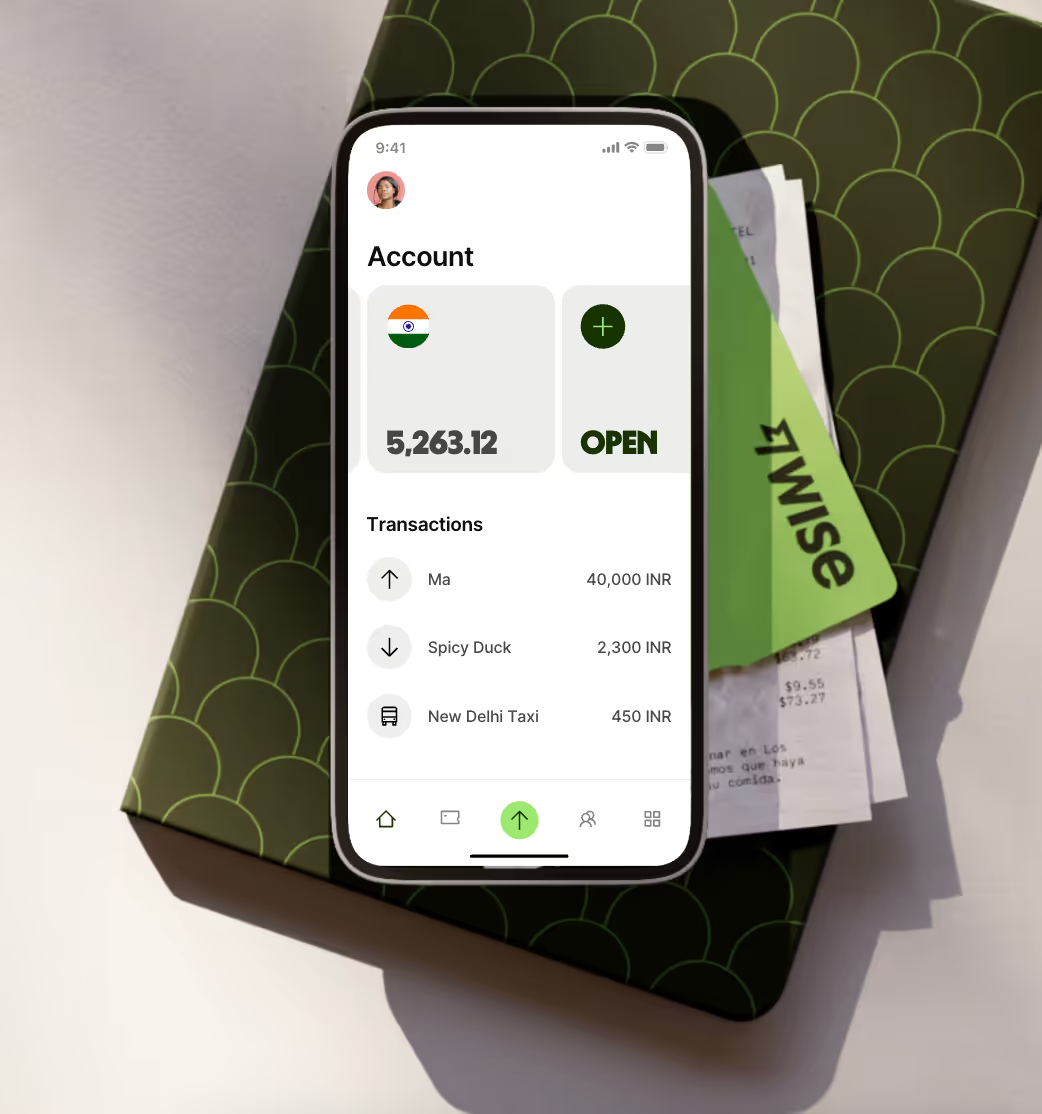
Wise’s referral program is engineered for financial services, where regulatory compliance, fraud prevention, and customer value vary dramatically from typical consumer apps.
The program uses a dual-benefit structure: the referred user receives a discounted or free international transfer up to a capped amount, while the referrer earns a cash reward, but only after a batch of invited friends meet strict qualification criteria.
These criteria include transferring above specific thresholds, performing genuine cross-currency transactions, and completing all verification steps. By focusing on quality rather than pure volume, Wise attracts highly valuable customers while protecting itself from low-intent activity and fraud.
Key features:
Analyzing the seven benchmark programs reveals a consistent five-stage architecture that successful referral systems follow.
While implementation details vary by business model and audience, these core mechanics appear across every high-performing program.
The highest-performing programs eliminate enrollment friction entirely through automatic enrollment. Every user receives a unique referral link or code at signup, embedded directly into product workflows like account settings, sharing menus, or onboarding screens.
For content businesses, the most effective approach is to weave referral links into every routine touchpoint - daily newsletters, weekly digests, in-app messages - so the opportunity to refer becomes part of the ongoing content experience.
For product-centric platforms, the equivalent is surfacing referral mechanics within the product’s natural usage paths. When a user is already sharing something, inviting someone, or completing a transaction, referral prompts feel logical and frictionless. Integrating referral tools at these moments turns everyday actions into advocacy opportunities.
Programs that require explicit opt-in introduce abandonment points, dramatically reducing participation rates.
The pattern is clear: make referral tools available by default, where participation requires one click rather than a multi-step process.
The most effective programs provide multiple sharing mechanisms to accommodate different contexts. Personalized codes work well for verbal sharing and text messages; unique links handle attribution automatically for email and social media; and pre-formatted sharing buttons reduce friction to a single click in regular communications.
Modern attribution systems link a referral link or code to a specific account and maintain that association, even if someone switches devices or installs the app for the first time. Deep links help carry this information through the entire onboarding flow so referrals are tracked automatically.
The important point is that all of this happens behind the scenes. Users shouldn’t have to worry about whether their referral will count or understand how the tracking works; the system should simply work every time.
This is where programs separate genuine value creation from gaming and low-intent signups. Every successful program defines clear "success events" that balance growth velocity with customer quality.
Some programs add batch qualification, requiring multiple qualified referrals before issuing rewards. This filters for engaged advocates and improves program economics by grouping high-value rewards with multiple customer acquisitions.
The threshold must match business economics: high-LTV businesses can afford stricter gates that ensure quality. At the same time, low-friction products with network effects benefit from lower barriers that maximize viral velocity.
The reward structure determines both participation rates and program economics, with three distinct models emerging from successful programs.
How rewards are delivered determines both program economics and impact on customer loyalty, with four primary approaches visible across successful programs.
The choice of reward currency should reflect your brand positioning and economic model.
Digital and platform businesses gravitate toward product-based rewards with near-zero marginal cost. Premium brands use status and access to reinforce exclusivity. Mass-market platforms racing to critical mass use universal cash. Financial services balance cash incentives with product demonstrations that showcase core value propositions.
None of these stages exists in isolation. The most successful programs create seamless flows where enrollment is invisible, sharing is effortless, attribution is automatic, qualification is clear, and rewards are instant and meaningful, ideally delivered through the product itself.
When all five stages work together, the referral experience feels like a natural product feature rather than a bolted-on marketing campaign. Users don't think "I'm participating in a referral program" - they think "I'm sharing something valuable with friends and getting rewarded for it."
That subtle psychological shift makes the difference between programs that generate marginal lift and those that become primary growth engines.
Traditional loyalty programs focus primarily on retention, rewarding repeat purchases, tenure, and engagement through points, tiers, and exclusive benefits. Their goal is to increase customer lifetime value and reduce churn among existing customers.
Referral programs, by contrast, function as acquisition channels that leverage trust networks to attract new, high-quality customers.
The real power emerges, however, when these two mechanics work together. Loyal customers, those who already demonstrate high satisfaction and engagement, are your most credible advocates. When you give them tools and incentives to refer friends, they bring in prospects who arrive with pre-established trust and convert at significantly higher rates.
These referred customers, in turn, enter your loyalty program with stronger initial engagement and are more likely to become advocates themselves.
Forward-thinking brands are implementing several proven integration approaches:
When properly integrated, loyalty and referral programs create what experts call the "retention-acquisition flywheel": satisfied customers stay longer (retention), become advocates (acquisition), refer high-quality friends who also demonstrate higher loyalty (retention), and those friends become advocates themselves (acquisition).
This continuous cycle compounds over time, with each rotation becoming more efficient as your customer base increasingly consists of high-value, referred members who are themselves advocates.
The integration also addresses a critical business challenge: referred customers are more emotionally connected to brands than those acquired through paid channels, making them both more likely to participate in loyalty programs and more resistant to competitive offers.
For loyalty managers, this means referral programs shouldn't sit in the acquisition team's domain. They're a natural extension of customer relationship strategy that amplifies the value of every loyal customer you've already invested in retaining.
The seven programs explored here could not be more different, spanning cloud storage, mobility, media, fintech, travel, grooming, and electric vehicles, yet their engines run on the same fundamentals.
They validated product-market fit before turning on incentives, chose rewards that enhanced the core product rather than distracting from it, and aligned economic incentives with their business model rather than copying generic templates.
But referral programs aren’t universal magic. Some categories unlock disproportionate value, knowing where referrals shine helps leaders place the right bets.
High-trust categories (financial services, healthcare, insurance, energy) see extraordinary referral performance because trust is the primary decision driver.
Habit-forming subscriptions thrive because each new user adds recurring revenue with minimal incremental cost. SaaS platforms, media newsletters, and mobility apps can offer generous incentives, knowing the economics pay back quickly, when marginal cost approaches zero.
Digital products and marketplaces benefit from highly asymmetric reward structures. Extra storage, premium access, or advanced features cost the business almost nothing but feel valuable to the user.
Social and aspirational brands (travel, hospitality, lifestyle, premium consumer goods) win because people already talk about their experiences. These categories don’t need to manufacture advocacy; they simply channel it. Referral programs here accelerate a conversation that already exists.
For industries outside these sweet spots, referral programs can still work, but only when built on real customer enthusiasm. If existing customers don’t naturally talk about your product, no incentive structure will fix the underlying problem. Strengthen product-market fit first; amplify advocacy only once it already exists.
The economics are unmistakable. With CAC rising sharply, ad prices climbing annually, and privacy changes eroding targeting precision, referrals offer efficiency. Yet, the lesson from the programs in this article is simple: referral success isn’t about copying Dropbox, Tesla, or Airbnb.
It’s about understanding your audience, your economics, and your brand truth, and designing mechanics that reward genuine advocacy in ways that feel natural, valuable, and fair.
Look for signs of organic advocacy first - unprompted customer testimonials, social media mentions, or existing word-of-mouth growth. If customers aren't naturally recommending your product, adding incentives won't help.
Also, ensure you understand your unit economics and can afford the program. Referral programs amplify existing enthusiasm; they don't create it.
Product-based rewards typically work better for digital businesses – they cost less, increase product stickiness, and keep value in your ecosystem.
Use cash only when you need mass-market appeal quickly or lack natural product rewards.
Premium brands should focus on status and exclusive experiences rather than monetary incentives.
Match the qualification to your economics. Low barriers (email signup) work for network-effect businesses with minimal costs. High barriers (completed purchases, sustained usage) protect economics when acquisition is expensive.
Consider batch qualification – requiring multiple qualified referrals before rewards – to filter for genuine advocates and improve program ROI.
Use shared reward currencies that work across both programs. Make referrals count toward loyalty tier advancement. Trigger referral prompts after loyalty milestones or redemptions when satisfaction is highest. Give top-tier loyalty members exclusive or enhanced referral rewards.
The goal is to turn your most loyal customers into your best acquisition channel.
Track quality, not just volume: conversion rates of referred vs. other channels, lifetime value comparison, retention and churn rates, time-to-second-purchase, and percentage of referred customers who become advocates themselves.
Also monitor program economics: cost per acquisition through referrals, reward redemption rates, and fraud rates. Success means acquiring customers who stay longer and spend more.

API-first loyalty and gamification engine

Get a weekly dose of actionable tips on how to build and grow gamified successful loyalty programs!