Points-per-dollar programs are everywhere in quick-service restaurants. But the brands pulling ahead on visit frequency, average order value (AOV), and customer lifetime value (CLV) are the ones layering gamification on top of those points – turning routine transactions into experiences members actually look forward to.
The global quick-service restaurant (QSR) industry surpassed $1 trillion in 2025, and loyalty programs have become a core growth lever across the sector. Yet most QSR loyalty programs still rely on a simple earn-and-burn model that fails to differentiate one chain from the next.
Gamification changes that equation. By introducing game-like mechanics – challenges, tiers, badges, games of chance, and leaderboards – QSR brands create emotional engagement that flat discounts cannot replicate.
The data backs this up. According to Open Loyalty's Loyalty Program Trends 2026 report, 42.1% of loyalty professionals identify gamification and game-based mechanics as having the biggest impact over the next two to three years – up from 22.2% in 2021. Meanwhile, 38% plan to invest in gamification, the highest figure the report has ever recorded.
This guide breaks down the gamification mechanics that deliver the strongest results in restaurants and food, with real-world examples from leading QSR brands and the KPIs each mechanic can help you move.
QSR presents particular problems compared to other industries. Industries such as banking or travel reward patience – customers research, compare, and weigh up options before they buy. QSR decisions happen on habit, craving, and whatever's visible at the point of purchase, often in under ten seconds.
The mechanics that work in high-consideration categories – complex tier structures, long accumulation windows, multi-step challenges – tend to underperform in food.
Gamification here has to match the natural rhythm of how people eat: fast feedback, low friction, rewards that feel immediate.
"QSR is a high-frequency, low-consideration industry. Customers make fast decisions based on habit, convenience, cravings, and small emotional triggers.
That changes which mechanics succeed – compared to industries like banking, travel, or fitness."
Dominika Korta, Loyalty Expert who has worked with Pizza Hut, Starbucks, Tim Hortons, and more
Time-bound tasks that reward members for completing specific actions – visiting a certain number of times in a week, trying a new menu item, ordering through the app, or spending above a threshold. Streaks extend the concept by rewarding consecutive completions ("Visit three Mondays in a row").
Quick-service restaurants depend on habitual visits. Challenges and streaks convert occasional customers into regulars by creating a psychological "open loop" – the member has started something and feels compelled to finish it.
The loss aversion of breaking a streak is a powerful retention tool. As the Open Loyalty Trends 2026 report notes, QSR programs rely on "frequency acceleration through digital punch cards, visit-based tiers, streak incentives, and time-bound missions."
Chipotle Rewards introduced "Extras" – personalized challenges that ask members to try new proteins, order digitally twice per week, or add guacamole to consecutive orders. Completing challenges earns bonus points and unlocks achievement badges.
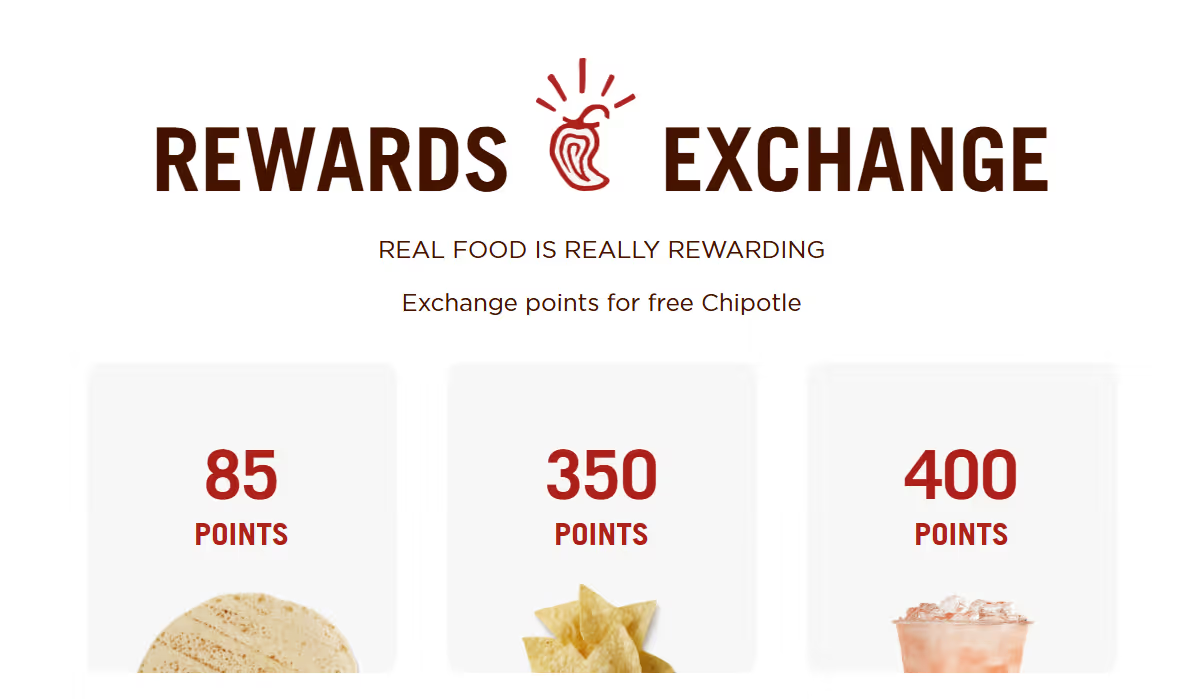
Chipotle's "Summer of Extras" campaign drove a 14 percent year-over-year increase in digital sign-ups. Then-CEO Brian Niccol said on Chipotle's Q2 2024 earnings call:
"We had a record-breaking National Burrito Day, where our gamified promotion resulted in Chipotle best sales and digital sales day ever. It also drove an influx of new and lapsed customers and was the best enrollment day of the year for our rewards program." – PYMNTS
McDonald's MyMcDonald's Rewards runs limited-time challenges tied to new menu items and specific dayparts. Challenges are paired with push notifications and progress tracking in the app, creating a tight feedback loop between action and reward.
Starbucks Rewards uses weekly challenges to unlock bonus "Prize Plays" during its annual "Starbucks for Life" game. Members earn extra game entries by completing purchase-based challenges – a hybrid mechanic that combines challenge completion with games of chance.
Use loyalty campaign software to configure challenges with specific triggers, timeframes, and reward tiers without custom development.
Progression systems that place members into escalating status levels based on cumulative spend, visits, or points. Higher tiers unlock better earn rates, exclusive perks, and early access.
Tiers tap into status motivation – one of the most enduring psychological drivers of human behavior. When a member can see they are 200 points away from Gold status, they actively seek opportunities to earn.
The "near-miss" effect is especially powerful in QSR because the average transaction value is low enough that an extra visit feels like a small commitment.
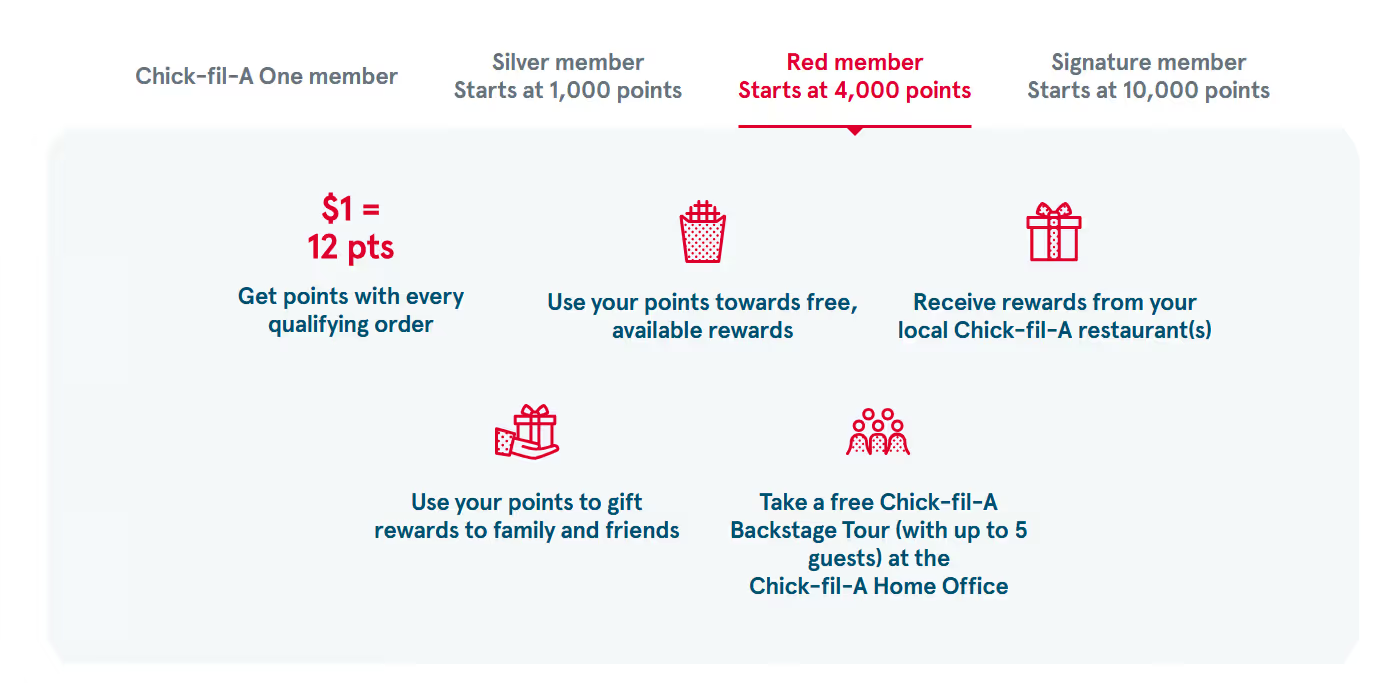
Chick-fil-A One runs a four-tier system – Member, Silver, Red, and Signature – with progressive point multipliers from 10 to 13 points per dollar. Higher tiers unlock gift-sharing, birthday rewards, and early access to new items.
Taco Bell Rewards uses two tiers – Hot and Fire – with the Fire tier requiring higher annual spend. Fire members receive double points on certain purchases, exclusive merchandise, and surprise rewards.
Subway MVP Rewards features three tiers – Pro, Captain, and All-Star. Higher tiers earn more Subway Cash per dollar, creating a direct incentive to consolidate food spending at Subway rather than competitors.
See our guide on effective tiered loyalty programs for a deeper look at tier design principles.
Mechanics where the outcome is determined by randomness – spin the wheel, scratch cards, lucky draws, and treasure chests. Members earn plays through qualifying actions (purchases, app check-ins) and receive instant or drawn prizes.
Games of chance compress the reward timeline from weeks to seconds. In an industry where the average ticket is low, waiting months to accumulate enough points for a free item kills momentum.
A scratch card that reveals "Free fries – right now" after a purchase delivers the instant gratification that keeps members engaged between bigger rewards.
KFC Rewards Arcade is one of the most data-rich examples in QSR gamification. KFC launched daily arcade-style minigames that members play twice per day for a chance to win free menu items. According to a Braze case study, the program attracted 2.3 million new app users, generated over 1.8 million gameplays, and delivered a 44 percent increase in daily app use.
Tim Hortons Roll Up to Win is a seasonal institution in Canada. Members physically roll their cup rim (or tap a digital button in the app) to reveal instant prizes – from free coffee to vehicles. Bonus Rolls reward Tims Rewards members and reusable cup users.
Starbucks for Life runs annually with instant-win game pieces and a grand prize of free Starbucks for 30 years. The campaign creates mass participation and media coverage that extends well beyond the loyalty member base.
For a complete guide on implementing these mechanics, see games of chance in loyalty: great examples and how to use them.
Visual markers that members earn by completing specific actions – trying every protein on the menu, visiting five different locations, ordering before 8 AM ten times, or referring a friend. Badges are collected and displayed in the member's profile.
Badges activate the "collector's mindset" – the same psychological mechanism that makes people complete sticker albums or unlock achievements in video games.
In QSR, badges serve a dual purpose: they reward behaviors the brand wants to encourage (new product trial, off-peak ordering, referrals) and they give members a reason to engage with the app beyond simply placing an order.
Chipotle Rewards was the first restaurant brand in the US to introduce achievement badges into its loyalty program through the "Extras" feature. Members earn badges for actions like trying every protein, ordering guacamole on consecutive visits, or completing a certain number of digital orders.
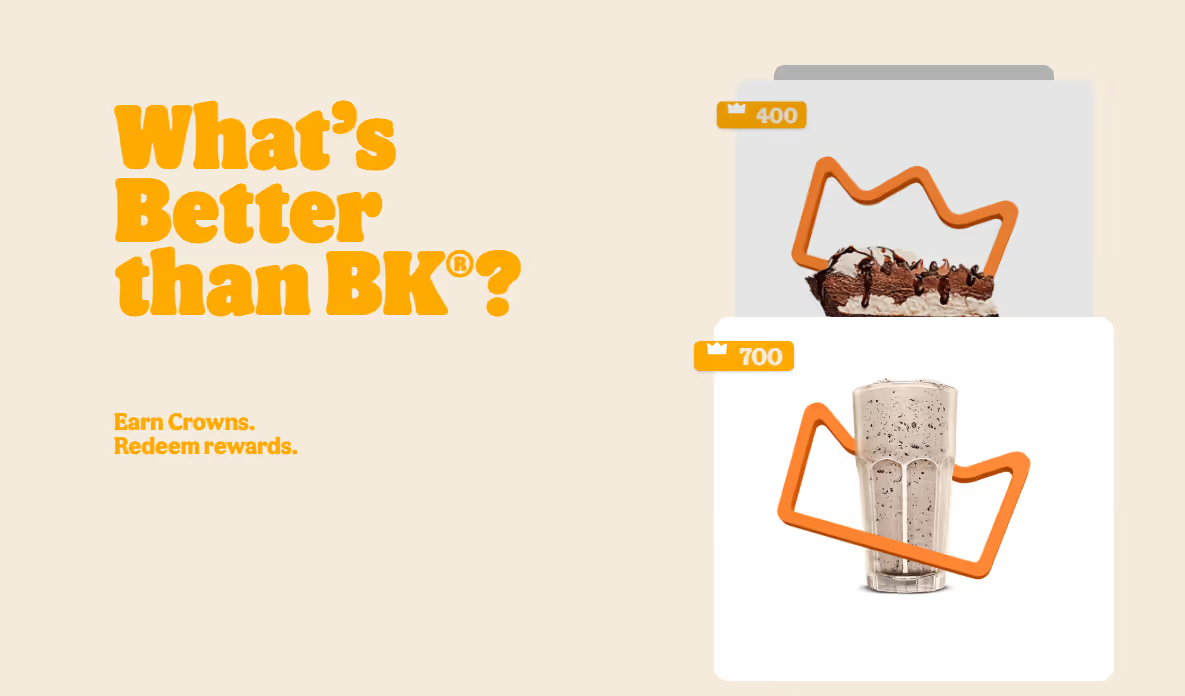
Burger King Royal Perks awards collectible badges for journey milestones – first order through the app, reaching a Crown balance threshold, ordering during a limited-time promotion. Badges are paired with bonus Crown rewards, connecting the achievement to tangible value.
Chick-fil-A One uses a "Code Moo" interactive summer game with weekly missions that award special achievement badges and prizes. The seasonal campaign drives engagement during the competitive summer months.
Combine badges with referral program software to gamify your member acquisition funnel.
Rankings that display how members compare against peers – by points earned, challenges completed, or visit streaks maintained. Leaderboards can be global, regional, store-level, or even friend-group based.
Social comparison is a powerful motivator, particularly among younger demographics that form the core QSR audience. A member who sees they are ranked #47 out of 500 at their local store has a tangible incentive to order one more time and climb.
Leaderboards also create a sense of community around a brand that transactional programs cannot achieve.
Domino's experimented with competitive mechanics through its "Piece of the Pie Pursuit" mobile game – a six-level pizza-themed challenge where members competed for bonus rewards. The competitive framing drove engagement far beyond what a standard points offer would achieve.
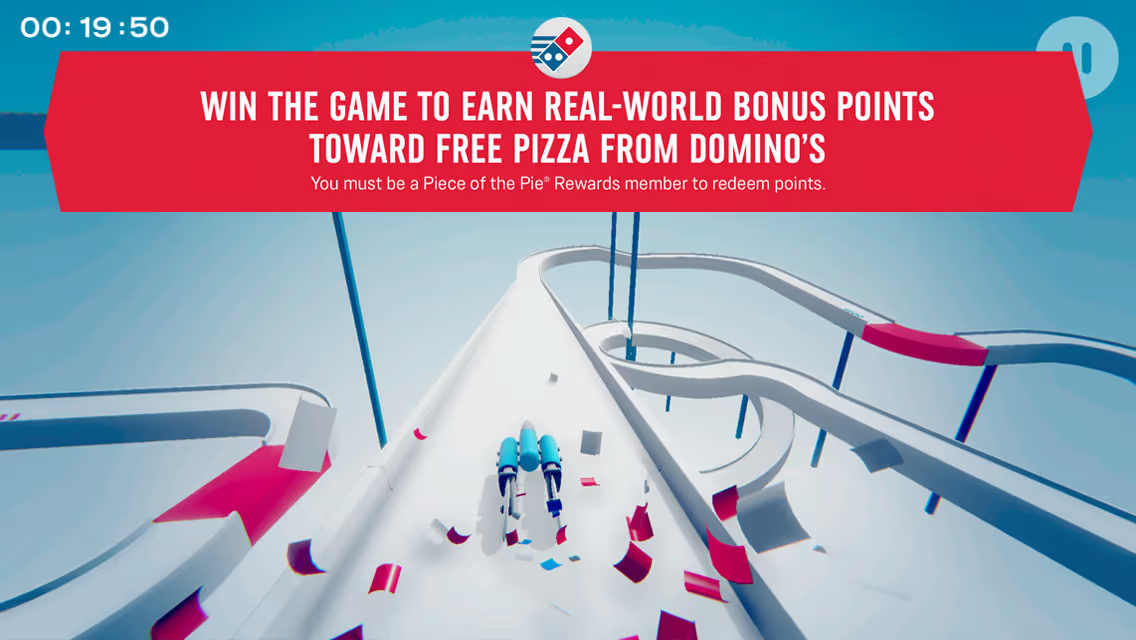
Several QSR brands use store-level leaderboards during promotional campaigns – ranking locations by aggregate member activity and awarding prizes to top-performing stores. The mechanic creates a layer of team-based competition that engages both staff and customers.
See our examples of successful leaderboard gamified tactics across industries.
Visual indicators that show members exactly how close they are to earning a reward – "You are 40 points away from a free drink" with a filled progress bar. Milestones are the specific thresholds where rewards unlock.
The "goal gradient effect" – the closer a person is to completing a goal, the faster they work to achieve it – is one of the most reliable findings in behavioral science.
In QSR, where visit decisions happen daily, showing a member they are 80% of the way to their next reward can be the difference between choosing your brand and a competitor.
"A customer seeing '2 more visits until your free drink' is psychologically far more motivated than seeing 'You have 120 points.' The goal feels tangible and achievable."
Dominika Korta
McDonald's MyMcDonald's Rewards prominently features a visual progress bar in its app that shows how close members are to their next redeemable reward.

The approach works: according to PYMNTS, non-loyalty McDonald's customers visit 10.5 times per year on average, while MyMcDonald's Rewards members visit 26 times – a 148 percent increase in frequency.
McDonald's CEO Chris Kempczinski reinforced this on the company's 2025 Q4 earnings call:
"Our opportunity is always around frequency. Getting more and more consumers to be in our loyalty program – that's how we're going to drive this business, because it's going to be frequency-led growth." – PYMNTS
CFO Ian Borden added:
"Customer loyalty and digital engagement are going to be really important ways for us to drive check and frequency as we move forward. Loyalty drives more visits and those customers spend more over time." – PYMNTS
Starbucks Rewards uses a star-based progress dashboard that updates in real time after each purchase, showing both short-term reward proximity (next free drink) and long-term tier progress (Gold status). The dual progress indicator creates two simultaneous motivational loops.
Dunkin' Rewards shows points accumulating toward a free beverage with a simple, prominent progress bar. The visual simplicity is critical in QSR – members glance at the app in a drive-through line and need to understand their status in under two seconds.

The Domino's Pizza Tracker (fact sheet) is one of the most referenced examples of gamified UX in QSR – and it has nothing to do with points or prizes.
By making order fulfillment visible as a stage-by-stage progression (Order placed, Prep, Oven, Quality check, Out for delivery), Domino's turned a dead waiting period into something customers actually watch. The underlying psychology is identical to a progress bar: anticipation, visible movement toward a goal, and the satisfaction of closure.
Time-bounded campaigns that layer gamification mechanics on top of seasonal events – holiday scratch cards, summer challenges, anniversary spin-the-wheel promotions.
The key is artificial scarcity: the game is only available for a defined period.
QSR revenue is highly seasonal, and limited-time gamification campaigns create urgency that drives traffic during both peak and off-peak windows. A summer game drives visits when competition for share of stomach is fiercest.
The temporary nature of the campaign activates loss aversion – "If I do not play now, I miss out entirely."
Tim Hortons Roll Up to Win runs as a multi-week spring campaign with escalating prizes. The program has become so iconic that it generates earned media coverage worth millions – effectively doubling as both a loyalty campaign and a brand awareness play.
Starbucks for Life runs annually during the holiday season, with weekly challenges unlocking bonus game plays. The campaign drives a measurable spike in visit frequency among Rewards members during a period when hot beverage consumption is already high.
Burger King Royal Perks runs "Whole Lot-O Crowns" limited-time games that appear during promotional windows, offering bonus Crowns and instant prizes. The campaigns are designed to re-engage dormant members who may not visit regularly.
It's important to note the most famous example: McDonald's Monopoly, which has been running, in various forms, since 1987 – and holds up because it stacks five mechanics at once: instant wins (peel and find out immediately), collectability (complete a color set), social behavior (trading pieces), anticipation (every purchase is a new draw), and repeat visit incentives (more visits means more pieces).
Not every mechanic suits every brand. The right combination depends on your business objectives, your customer base, and your operational constraints.
Start with challenges, streaks, and progress bars. These mechanics create the tightest feedback loop between action and reward – and they work at every price point.
Tiers and milestone-based rewards are most effective. Set tier thresholds and reward milestones at levels that require slightly larger orders to reach.
Games of chance and badges are the strongest drivers. Exclusive in-app games give members a reason to download and open the app beyond placing an order.
Deloitte's 2024 Consumer Loyalty Survey – which surveyed over 9,800 consumers globally – found that three-quarters of Gen Z and millennial consumers consider a high-quality digital experience essential. That makes app-based gamification a baseline expectation, not a differentiator, for younger demographics.
Leaderboards and collectible badges set your program apart from earn-and-burn competitors. These mechanics create emotional investment that transactional rewards cannot match.
The strongest QSR loyalty programs combine multiple mechanics into a layered system. Starbucks Rewards uses tiers, challenges, progress bars, and seasonal games of chance simultaneously. Chipotle Rewards pairs challenges with badges and bonus point events. The common pattern: no single mechanic carries the program alone.
For a broader view of gamification in marketing beyond QSR, and supporting gamification statistics on engagement lift, see our dedicated guides.
Two patterns consistently fail in QSR: complexity and delay.
If customers have to understand earning rules before they order, the mechanic is already losing. And if the reward sits 30 purchases away, most members disengage long before they get there. Food decisions are immediate – the program's feedback loop needs to match that pace.
Let's get more specific:
QSR customers make decisions in seconds – often in a drive-through line. If earning mechanics require mental math or multi-step processes, participation drops.
The most successful programs (McDonald's, Dunkin') use simple ratios: 100 points per dollar, 10 points per dollar. Keep it intuitive.
A standalone scratch card promotion drives a traffic spike, but the value evaporates if new members do not convert into regular program participants.
Connect every game to your loyalty points system, tier progression, or badge collection so the engagement compounds.
Around 70% of QSR loyalty users engage through apps, meaning gamification mechanics that require desktop access or in-store kiosks miss most of your audience.
Deloitte's 2024 Consumer Loyalty Survey confirms this: across 9,800+ respondents, 86 percent rate simplicity and ease of use as "important" or "very important" in a loyalty program. Design every mechanic for thumb-first interaction.
Gamification requires ongoing optimization. Track loyalty program metrics for each mechanic – participation rate, incremental transactions, cost per engagement – and rotate campaigns based on performance data.
Use customer loyalty analytics to identify which mechanics move the needle for different segments.
The QSR brands that lead on loyalty are not the ones with the most generous point ratios – they are the ones that make the experience of earning and redeeming feel like something worth engaging with.
Challenges, tiers, games of chance, badges, leaderboards, and progress bars each solve different business problems, and the most effective programs combine them into a cohesive system. With 42.1% of loyalty professionals now identifying gamification as the mechanic with the biggest impact in the years ahead, the question is no longer whether to gamify your QSR loyalty program – it is which mechanics to prioritize first.
If you are evaluating how to add gamification to your QSR loyalty program – or build one from scratch – Open Loyalty's gamification engine is designed for exactly that: an API-first platform that lets you deploy challenges, tiers, badges, leaderboards, and games of chance across any channel, with full control over rules, triggers, and rewards.

API-first loyalty and gamification engine

Get a weekly dose of actionable tips on how to build and grow gamified successful loyalty programs!