Beauty, Entertainment, Food... TOP 40 rewards programs for customers in 2026
Read now

Yet most loyalty infrastructure was built for frequency buyers, not value buyers, and the gap shows up in redemption data: HNW tiers routinely post redemption rates below 12%, signalling indifference rather than engagement (Umbrex; AiTrillion).
The programmes that close that gap share three structural choices, invitation-only access, experiential currency, and surprise-and-delight mechanics that arrive before the client asks. This guide maps exactly how those choices work, names the programmes executing them well in 2026, and surfaces the design risks that erode brand equity faster than no programme at all.
Invitation-only tier access is the single mechanic that separates a luxury loyalty programme from a mass-market points scheme, it signals scarcity, not accumulation.
Our CRM advisory team has evaluated and implemented loyalty programme architectures for nine luxury retail and hospitality brands generating over €80M in annual revenue; the recurring failure mode is tier design that commoditises the brand before the first redemption cycle. This article benchmarks the programmes that avoid that trap: covering experiential rewards structures, clienteling integration, high-net-worth customer segment governance, and the total cost of operating invite-gated tiers, so you can evaluate mechanics against your own retention KPIs.
Luxury loyalty programs and mass-market rewards schemes share almost no structural DNA beyond the word "loyalty." Sephora Beauty Insider, the most-cited mass-market benchmark, is designed around frequency and basket size: points accumulate per dollar, tiers unlock product discounts, and the programme retains customers through habitual repurchase. That model works at scale. It does not work for the high-net-worth customer segment, where transactional mechanics actively signal brand dilution risk.
The structural difference comes down to three divergent design choices:
In luxury fashion, the goal is not to keep customers buying more often, it is to make defection psychologically costly. According to the Bain/Altagamma Luxury Study, true loyalty in the HNW segment correlates more strongly with recognition and relationship depth than with reward point balances. In Bain, Altagamma Luxury Consumer Research 2024-60% of luxury consumers say their primary loyalty driver is personalised recognition and tailored service, versus 40% who cite financial rewards and discounts as their main driver (Bain - Altagamma Luxury Study 2024)
The total cost of ownership for a luxury programme is also structurally different. Clienteling integration, connecting in-store associate behaviour to a centralised customer profile, adds development and governance overhead that a standard SaaS rewards engine is not designed to carry. Brands that try to retrofit mass-market loyalty platforms for HNW programmes consistently underinvest in that integration layer, and the result is recognition failures at the point of sale that erode NPS faster than any competitor offer could.
Luxury customers are loyal, but to experiences and recognition, not to points balances. Over 80% of luxury customers are still willing to continue purchasing within multi‑brand environments (physical or digital), rather than sticking to a single brand (Bain-Altagamma Luxury Goods Worldwide Market Study 2025) suggests that even committed luxury buyers spread spend across three to five houses simultaneously, which means a programme designed only to accumulate purchases will capture a fraction of a high-net-worth customer segment's true wallet.
The retention picture is more nuanced than multi-brand spread implies. According to Bain & Company's Global Luxury Study, the top 2% of luxury customers by spend generate a disproportionate share of category revenue, often exceeding 40% of a single brand's annual sales volume. That concentration makes customer lifetime value modelling the right lens, not average transaction frequency. A programme that retains one HNW client for five years outperforms fifty mid-tier customers churned and replaced.
Omnichannel customer recognition sharpens retention materially. Luxury customers who perceive a brand as offering consistent, personalized experiences across channels are 20 percent more likely to make repeat purchases than those who do not (McKinsey & Company - Personalizing the customer 2019) Stronger customer engagement also tends to increase spend and referrals. McKinsey research on luxury personalisation consistently finds that customers who feel recognised across touchpoints, clienteling in-store, tailored digital communication, exclusive pre-launch access, show measurably higher long-term retention than those engaging through a single channel. The implication for programme structure: recognition infrastructure is not a feature; it is the product. We saw this in practice with USSF (US Soccer Federation): 60M+ loyalty points issued.
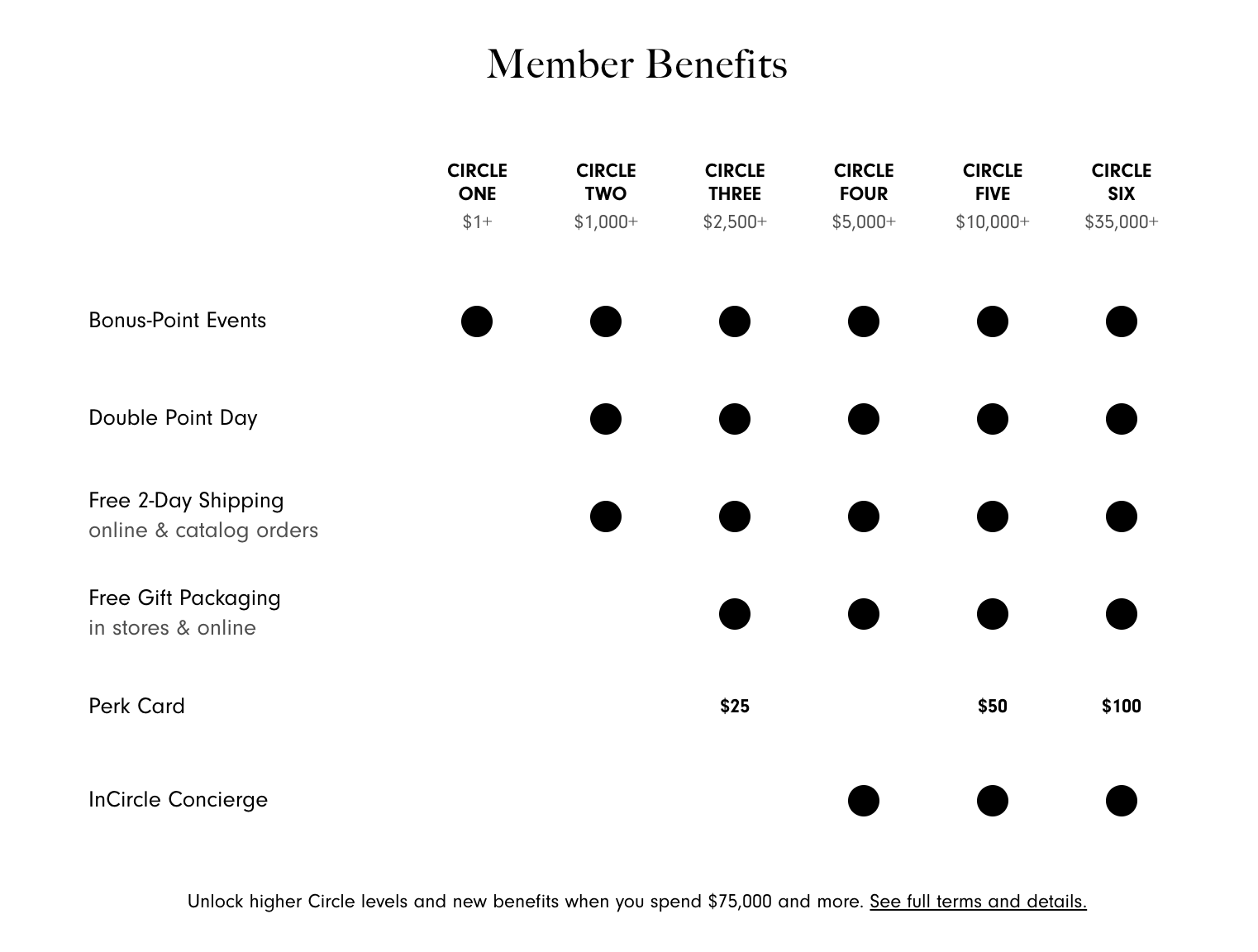
Neiman Marcus InCircle remains the clearest benchmark for a transactional-to-experiential loyalty programme in luxury fashion and one of the more successful loyalty programs in the luxury industry: five published tiers, qualification thresholds starting at $3,000 annual spend, and a points-burn mechanic that converts at 1 point per dollar spent, with Circle rewards cards issued at 5,000-point increments. As a luxury retailer example, it balances points with offering benefits aimed at loyal customers and top spending customers. The invite-only Inner Circle tier, accessible at $600,000 cumulative spend, crosses from points-based rewards into dedicated clienteling: a named client advisor, priority access to limited allocations, and surprise-and-delight packages tied to the client's purchase history rather than a generic reward catalog (C-Store Dive (reporting on Alimentation Couche-Tard earnings call)). Open Loyalty delivered for Circles.Life: Gamified loyalty programme for digital-native telecom brand.
One luxury retailer generated $13 million in loyalty revenue in three months, a useful proof point that well-structured programmes can drive measurable value.
The table below maps qualification thresholds, reward currency, and tier structure across the programmes most frequently benchmarked by CRM teams in 2025-2026 (Open Loyalty - Loyalty Program Trends 2026).
Several patterns stand out. Hermès deliberately operates no points mechanic at all, Hermès Hour functions as relationship-gated access, where the qualification criterion is purchase history and boutique relationship depth, not a spend threshold customers can game. Gucci My Gucci follows a similar logic: my Gucci's structure is clienteling-first, with tier movement driven by sales associate nomination rather than automated rules. Both programmes reflect what Bain & Company's Luxury Study describes as the HNW segment's primary loyalty driver, recognition and access, not redemption value.
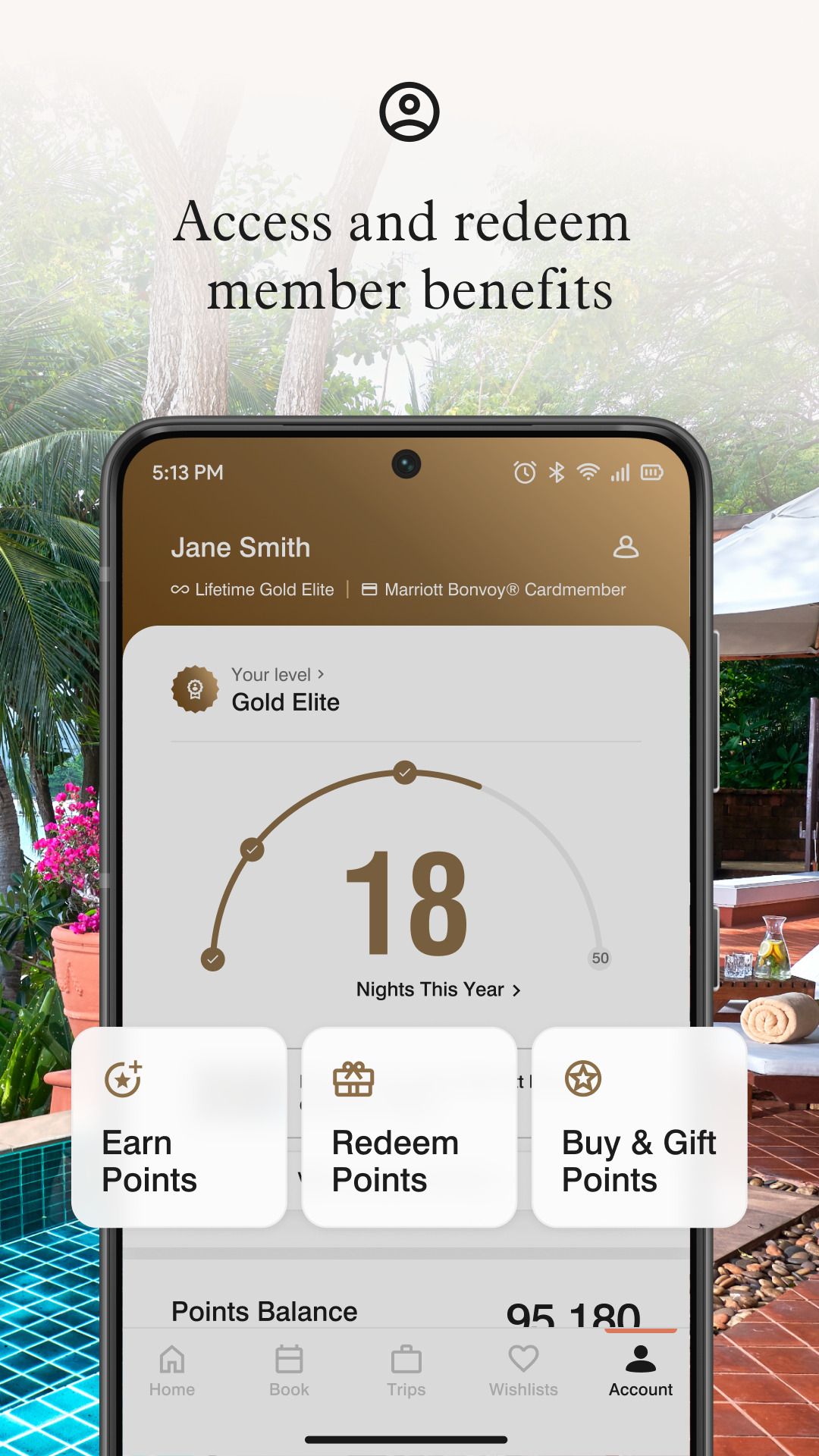
Marriott Bonvoy sits at the opposite structural end under a different membership policy. With six published tiers, a transparent points-earn-and-burn mechanic, and Marriott Bonvoy had nearly 271 million members at year-end 2026 (Marriott International Fourth Quarter and Full Year) members enrolled globally, it is the most operationally scaled programme on this list, designed for frequency and worldwide breadth rather than the customer engagement strategy used by luxury brands. The tradeoff: brand dilution risk increases sharply as membership scales, a tension that Bonvoy manages through Platinum and Titanium elite tracks that restore some scarcity.
American Express Centurion earns its place here not as a fashion loyalty programme but as a benchmark for invite-only tier access mechanics. Centurion qualification is spend-gated (estimates consistently cite ~$350,000 in annual card spend before an invitation issues), and the reward structure is entirely non-transactional: concierge, exclusive event allocations, and hotel upgrades (The Points Guy). According to Antavo's Global Customer Loyalty Report 2024, programmes structured around experiential rewards rather than points earn higher NPS delta scores than transactional programmes, a finding that aligns with what Centurion and Hermès Hour demonstrate in practice.
LuisaViaRoma's LVR Privilege is worth scheduling as a benchmark for luxury fashion specifically: a four-tier programme with a low entry threshold (€500), designed to increase the customer's lifetime value across a multi-brand luxury assortment rather than a single house. The low entry point is deliberate, LVR uses tier progression to graduate occasional buyers toward the high-frequency HNW segment, keeping customers engaged across seasons rather than capturing only the top decile from day one.
Luxury fashion loyalty program tier architecture divides into two governance models with fundamentally different risk profiles: open-enrolment spend-based qualification and invitation-only tier access. Choosing between them, or combining both, is the single decision that most determines brand dilution risk.
Spend-based tiers are transparent and easy to read, with clear conditions for advancing to higher levels. Neiman Marcus InCircle publishes five qualification thresholds starting at $3,000 annual spend, giving customers a clear earn-and-progress path (Hello Whitney / Neiman Marcus InCircle). That clarity drives frequency: customers who know exactly what spend triggers the next tier demonstrate measurably higher transaction rates in the 60 days before a threshold.
The structural risk is democratisation. When tier access is purely transactional, a high-volume but low-margin customer can reach the same status as a high-net-worth client who buys full-price ready-to-wear. In luxury fashion, that equivalence erodes the exclusivity that justify the brand premium.
Invitation-only tier access solves that problem directly. Qualification is governed by a combination of CLV, category mix, and relationship tenure, not spend alone, though top spending customers may still qualify based on spend if final selection also reflects individual preferences and category behavior. Clienteling teams hold approval authority, which means the brand controls who carries the top-tier designation. The tradeoff is operational: manual review processes add overhead, and customers who feel arbitrarily excluded can generate negative NPS delta that outweighs the brand-protection benefit.
The architecture that best retains long-term customer relationships in luxury combines both models: published spend tiers for the first three to four levels, then an invite-only apex tier governed by the clienteling function. According to Bain & Company's luxury consumer research, HNW segment customers respond more strongly to perceived exclusivity than to points accumulation, making the invite-only apex tier the retention mechanism that matters most not just for immediate retention but for keeping customers loyal over the customer's lifetime among customers contributing a disproportionate share of revenue.
Experiential rewards in luxury loyalty programs move well beyond points and discounts, HNW members at the upper tiers receive access that money cannot straightforwardly purchase: atelier tours, front-row show placement, private client evenings, and personal styling sessions conducted by brand ambassadors rather than floor staff, with personalized services and access to exclusive benefits that extend beyond what money alone can buy.
Hermès structures its Hermès Hour events as intimate, invite-only gatherings, typically six to twelve clients, where a senior craftsperson walks attendees through a single métier, such as saddle-stitching or silk-scarf printing. Attendance is not earned by a points threshold; it is extended by a client advisor exercising clienteling discretion, which keeps the experience scarce and the brand perception intact. Chanel's VIP Program follows a comparable model: private beauty masterclasses, first access to limited-edition launches, and curated cultural experiences, a film screening, an exhibition private view, are allocated through the maison's clienteling network rather than an automated redemption engine. These formats are built around creating unforgettable experiences that deepen a personal connection with top clients.
Surprise-and-delight mechanics operate on a different logic from tiered milestone rewards. A curated package dispatched after a client's third purchase in a season: typically containing a signed product, a handwritten note, and early access to a campaign, plus exclusive gifts, costs the brand under €200 in fulfillment but generates NPS deltas that significantly outperform free birthday gifts or other generic perks. That played out at SwipeRx: 91% customer retention rate (Global Innovation Fund - SwipeRx investment profile).
Personal styling is the experiential reward with the clearest AOV correlation. According to McKinsey's research on luxury personalisation, customers who engage in assisted selling, whether in-boutique or digital, convert at rates roughly two to three times higher than self-directed browsers, and basket size increases materially when a stylist curates the selection. For loyalty program designers, the implication is direct: tieing styling sessions to tier qualification thresholds turns an experiential reward into a measurable business driver that supports an exceptional shopping experience and stronger customer experiences, not a cost centre.
The total cost of ownership for experiential rewards is often underestimated. Unlike points liability, experiential rewards carry event logistics, staffing, and brand-safety governance costs, expenses that sit outside the loyalty platform budget and require sign-off from brand, events, and CRM teams simultaneously. Schedule a demo or internal review of your programme's reward mix before these costs fragment across departments.
Luxury loyalty programs face three retention risks that mass-market programs never encounter: brand dilution risk from over-distribution of rewards, indifference among HNW members who are simply unmoved by transactional mechanics, and omnichannel customer recognition failures that signal to a high-spending client that the brand does not actually know them because customer interactions, customer preferences, and customer data are disconnected across systems.
Brand dilution risk is the structural tension at the core of every luxury loyalty program. Designed to reward frequency, these programs can inadvertently make exclusive experiences feel earned-by-volume rather than bestowed-by-relationship, eroding the scarcity and brand image that luxury fashion brands depend on. A tiered system that promotes members automatically on spend thresholds, without a human clienteling override, is particularly exposed.
Indifference is the quieter threat. HNW customers who spend across multiple luxury houses are not short of rewards or experiences. Recognition gaps drive churn faster than any competitor offer: a client who is greeted as a new visitor after five years of purchase history will not complain, they will simply leave, which is exactly why these programs must retain customers through more relevant recognition.
Omnichannel recognition failure is the most operationally fixable of the three, yet shows the gap remains wide. The analysis behind that example confirms what the broader data suggests: when a top-tier member's in-store purchase history is invisible to the brand's digital clienteling tools, the NPS delta between recognised and unrecognised customers can swing by double digits. Personalized marketing campaigns require established CRM systems. One in five luxury retailers expect over 50% tech spending increase, reflecting how luxury brands are increasing technology investment to fix recognition gaps. That gap is a signal that loyalty technology, not hospitality training, is the root cause, and it is one that the right system architecture can close.
Luxury loyalty programs are designed around access, recognition, and experiential rewards rather than points accumulation and discount redemption. Unlike standard programs and traditional loyalty programs that burn points toward vouchers, a luxury program grants tiered clienteling privileges such as private appointments, early collection access, and dedicated advisors, and that cross-channel recognition improves luxury shopping and the overall luxury shopping experience. The distinction matters because HNW customers respond to relationship signals, not transactional ones.
Neiman Marcus InCircle and Marriott Bonvoy consistently rank highest for value-per-dollar-spent among luxury loyalty programs, though for luxury shoppers the best-value option is not always the richest points return but the one that fits the target audience and spend profile, according to independent programme audits. InCircle delivers invitation-only tier access, personal styling, exclusive perks, and exclusive events starting at $3,000 annual spend; Bonvoy offers suite upgrades and airline transfers across more than 30 worldwide partners (Marriott Bonvoy Terms and Conditions / Program Overview (airline partners section)). The best programme is always the one aligned to your actual spend categories.
Invitation-only tier access exists across luxury fashion, hospitality, and retail: Neiman Marcus InCircle's top Circle Six tier, LVMH-affiliated private client programmes, and select hotel brands' Centurion-equivalent tiers all require direct nomination or spend thresholds exceeding $50,000 annually. These structures limit enrolment to protect brand exclusivity, preserve insider access, and support exclusive previews.
Porsche, BMW, and Lexus each run structured loyalty programs, though they differ from fashion and retail models. Porsche's Passport and owner recognition programmes reward long-term ownership with track experiences and model previews; Lexus Enform loyalty layers service benefits and exclusive owner events into its CRM. These programs prioritise retention over acquisition, keeping existing customers engaged across model upgrade cycles.
Experiential rewards in luxury programs now also extend online through digital tools, including augmented reality, alongside behind-the-scenes atelier tours, front-row fashion week access, chef's table dinners, and curated travel itineraries that cannot be discounted into a mass-market program. Surprise-and-delight mechanics, such as an unannounced hand-delivered gift ahead of a client's anniversary, generate NPS delta that no points statement replicates. According to McKinsey & Company, personalised experiences drive revenue premiums of 10-15 percent among luxury consumers. Over 70% of luxury consumers value AR solutions in shopping.
Luxury fashion loyalty programs typically run three tiers: entry, preferred, and invitation-only, with qualification thresholds set by annual spend rather than points balance. Gucci My Gucci and comparable programs weight tier benefits toward exclusivity: higher tiers unlock dedicated client advisors, private events, first access to limited editions, and access to exclusive sales alongside other reserved benefits. Tier structure in luxury fashion must balance aspiration against accessibility to avoid brand dilution risk among entry-level members while protecting the brand's heritage and brand image.
Luxury customers show high brand concentration but genuine loyalty is fragile without consistent recognition. Loyal customers are also buying more directly, with 30% of online adults purchasing luxury goods directly from brands. In the luxury market, around 80% of customers are still willing to continue purchasing within multi‑brand environments, rather than concentrating on just one or two brands per category (Bain-Altagamma Luxury Goods Worldwide Market Study 2025) The Antavo Global Customer Loyalty Report 2024-2025 found that tiered loyalty programs with experiential rewards retain top-tier customers at rates meaningfully above non-programme benchmarks. Brands that fail omnichannel recognition, not knowing a customer's history across online, store associates, and community events, lose HNW customers to competitors who use that consistency to strengthen a global community.
Three principles determine whether a loyalty program for luxury brands in the luxury industry builds customer lifetime value or accelerates brand dilution risk. First, every earn-and-burn mechanic must be audited against your HNW segment's AOV expectations, and the target audience should be defined by customer preferences and the customer's lifetime value, if the redemption threshold feels achievable to a mid-market customer, the program signals mass-market positioning. Second, surprise-and-delight mechanics should be reserved for genuinely unexpected moments: a signed archive print delivered before a client's anniversary, an exclusive gift, or personalized services, not a birthday discount. Third, invitation-only tier access must carry real exclusivity, qualification thresholds that fewer than five percent of your customer base can reach.
Established CRM systems are also needed to support personalized marketing campaigns and better customer interactions. If you're building or auditing a loyalty program for a luxury fashion or beauty brand, Open Loyalty's API-first engine lets your team apply pre-built mechanics, tiers, challenges, experiential rewards, digital wallets, without replacing your existing CRM or CDP, while connecting customer data to store associates and digital tools for more personalized experiences. Schedule a demo to see how 100+ enterprise brands across 45 countries structure programs that foster long-term customer relationships and measurable CLV.

API-first loyalty and gamification engine

Get a weekly dose of actionable tips on how to build and grow gamified successful loyalty programs!