Beauty, Entertainment, Food... TOP 40 rewards programs for customers in 2026
Read now

Yet they solved it under constraints most enterprise brands will never face. The results are a compelling argument that loyalty belongs on the revenue side of the ledger. Club Brugge lifted attendance, spend per fan, and ticket resales in one season without a single new markdown. U.S. Soccer used the same behavioral engine to sell out a stadium that broad-reach marketing couldn't fill. Here's what that playbook means for your P&L.
The interesting part isn't that football clubs built loyalty programs. It's that they were forced to solve loyalty problems most enterprise brands don't even know they have. The fan can never churn to a rival mid-season, but can go passive forever — and most of the revenue arrives in roughly 20 concentrated matchdays a year. There is no win-back campaign for someone who still loves the club and simply stopped showing up. That combination forces clubs to abandon points-for-purchase mechanics and engineer behavioral loyalty instead: rewarding the actions that predict revenue, not the receipts that follow it.
Marcin Dyguda, who leads Open Loyalty's AI innovation lab and has worked directly with football clubs and federations around the world, frames the stakes bluntly: "Loyalty is not a cost center, at least it shouldn't be — it's a revenue driver. If you incentivize the right behavior, the revenue will follow."
That reframing collides with a tension clubs and enterprises share. Finance treats loyalty spend as a discount line to minimize; marketing treats it as a relationship to protect. Push monetization too hard and you're accused of exploiting the fan — the objection that has killed more than one loyalty proposal in a boardroom. Football's answer wasn't to choose a side. It was to change what gets rewarded, so that the fan wins (status, access, a smoother matchday) at the same moment the club does (a fuller stadium, a longer spending window, better atmosphere, more eyes for the partners).
Here's what that looks like at its simplest. A seat at the post-match press conference costs the club nothing. To the fan with the highest engagement streak of the season, it's priceless — bragging rights for life. A VIP parking spot for attending five home games in a row: near-zero cost, wildly overvalued by the person who earns it. Recognition scales where discounting can't, because a discount destroys margin every single time you grant it, and status doesn't.
The rest of this article is what that principle looks like at scale — first at a 130-year-old Belgian club, then at a national federation preparing for a World Cup, and finally inside your own program.
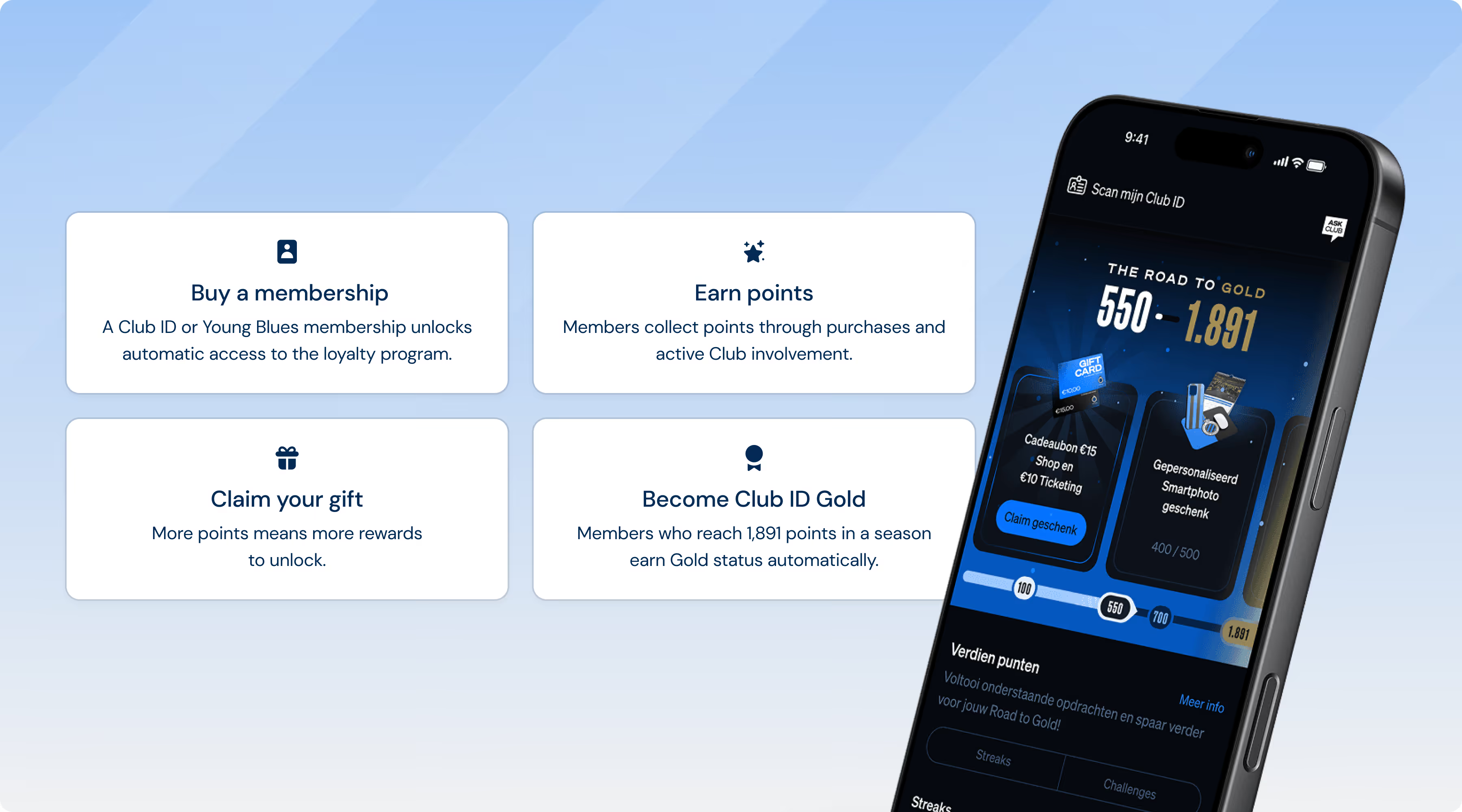
Club Brugge's problem was the empty-seat economy every club knows: seats sold to season-ticket holders who don't show up — revenue booked, value unrealized, because a no-show spends nothing on food, drink, or merchandise. The club's answer was to reward the behavior that fixes it. Members who release a seat they can't use back into the resale pool earn status and perks, not cash. Fans who arrive early enough to actually spend time in the stadium earn tier progress for it.
The season's results, from Open Loyalty's Club Brugge case study: 17% more tickets released, a 52.71% jump in resold tickets, an 11% increase in season-ticket-holder attendance, and 13.3% more spend per fan on merchandise, food, and beverage. One number in that program deserves special attention: Gold status unlocks at exactly 1,891 points, the year the club was founded.
Heritage, worn in the wallet as well as on the shirt.
Thomas Rypens, Innovation & Insights Director at Club Brugge, explains the constraint that shaped all of it: "A fan is not a customer, it's a sensitive relationship for spending budget. You need to make sure that the added value that you provide back to a fan matches the perception of what the fan invested in his fan journey."
The closest enterprise equivalent is a bank rewarding early mortgage or card renewal with status rather than a rate discount. It converts a passive churn risk into a scheduled, trackable behavior — and it pays for the reward in recognition, not margin.
Club Brugge used behavioral loyalty to squeeze more value from demand it already had — fuller seats, longer spending windows. U.S. Soccer pointed the same engine the other way: at demand it hadn't found yet.
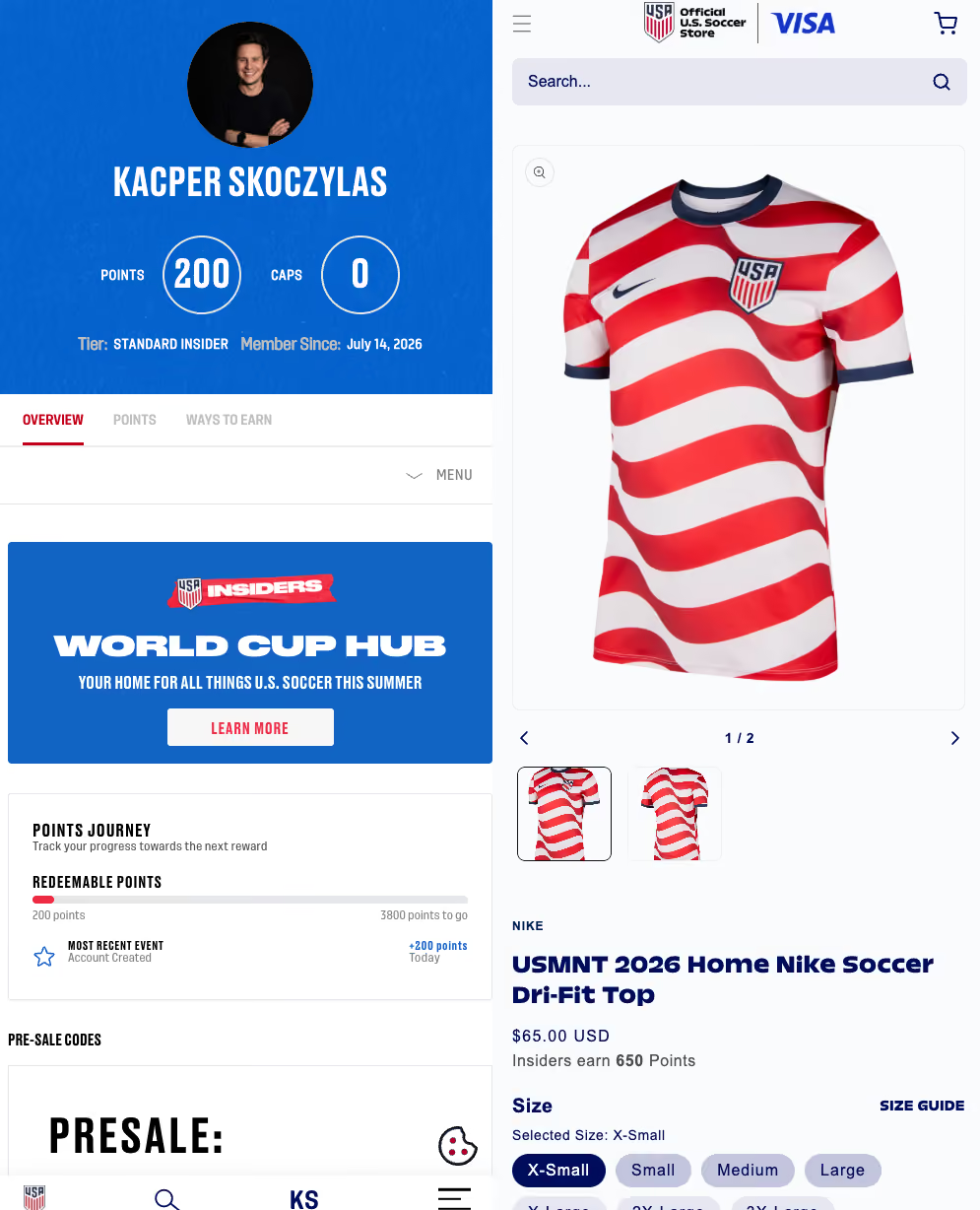
The federation's challenge is geography. A national team plays a handful of matches a year, scattered across a continent-sized country — the loyalty program is the stadium for most of its fans. When a Nashville match was tracking short of a sellout, the Insider program's engagement data became a targeting engine. Nicole Kusi, Director of Product at U.S. Soccer, describes it: "We used Open Loyalty to figure out who our most engaged fans are. And then we built audience segmentation around those fans that were in Nashville, and we only targeted those folks for ticket sales — and we actually sold out the stadium. And that does not always happen."
Predictive segmentation built from engagement history outperformed broad-reach marketing spend. And it scales: the Insider program has grown to 250,000 members in the build-up to the 2026 World Cup, with more than 60 million loyalty points issued — a standing acquisition asset, not a one-off campaign win.
Together, the two cases tell the real story. Brugge is retention economics: harvesting value already in the stadium. U.S. Soccer is precision acquisition: engagement history predicting who converts before a euro of media is spent. Enterprise programs usually stop at the first. The second is where the same data starts paying for the program.
The press-conference seat is the whole boardroom pitch in miniature: the club buys a season of measurable behavior at zero marginal cost. That's the vocabulary shift that wins the budget conversation: from "how much are we giving away" to "how much behavior are we buying, and at what cost."
Customers assign the highest value to things money can't buy: early access, insider status, experiences with a guest list. Variable mechanics stretch the budget further. A raffle, a scratch card, or a streak bonus keeps the engagement loop running without a guaranteed payout on every action.
The financial case is simple to instrument. Track revenue per active member against a dormant cohort, and report the gap as recoverable lifetime value, not marketing expense. Industry-wide, loyalty programs return an average of 5.2× their cost, with 83% of owners reporting positive ROI.
Just as a club adjusts its operations before, during, and after matchday, loyalty mechanics need to adapt continuously to customer behavior: release deadlines that shift as kickoff approaches, reward values that adjust to demand, segments recomputed from live engagement. These mechanics only work if your loyalty engine can react in real time. That's the real architecture question — not which platform has more features, but whether your loyalty logic can change as fast as customer behavior does.
Brugge's ticket-release rules — reward early release, adjust value as kickoff approaches — are exactly the kind of logic a fixed points-and-tiers platform can't execute without a vendor customization request, and a custom build spends months shipping. If your program's roadmap looks like this article (behavioral rules first, discounts last), the flexibility column is the one to optimize for.
Change what the budget buys. In practice: (1) baseline revenue per active member vs. dormant member so the gap is visible in finance's own units; (2) shift reward spend from flat discounts to behavior triggers — renewal, referral, early arrival equivalents like off-peak purchases or app check-ins; (3) report the program as recovered lifetime value against that dormant baseline, not as promotional cost. The reframe only sticks if the measurement changes with the rewards.
The transferable mechanics are tiers anchored in brand identity (Brugge's Gold tier at 1,891 points — your equivalent is a founding year, a flagship product, a heritage number), streak rewards for consecutive behaviors (five purchases, five on-time renewals), variable rewards like raffles and scratch cards that keep engagement high without guaranteed payout liability, and unbuyable-access rewards — early product drops, members-only events, priority support queues. Start with one behavior you want more of and attach the cheapest reward customers can't buy elsewhere.
By making the tier itself the switching cost. A subscriber holding priority network access, early device upgrades, or a fast-lane support queue loses something real by porting out — without the operator touching price. Benchmarks put churn reduction among tiered members at 20–30%. The design rule from football: tie tier progress to renewal milestones and tenure behaviors, so the path to status is itself the retention mechanic.
It inverts the campaign sequence. Instead of launching broad and measuring response, you score members on engagement signals — event attendance, redemption velocity, app activity — and activate only the segments whose history predicts conversion. Operationally that requires loyalty events streaming into your CDP or CRM as they happen, not in a weekly batch export; the segmentation is only as predictive as the data is fresh. The payoff is media spend concentrated on customers who convert, and silence toward those who won't respond at any offer depth.
Football clubs learned long ago that loyalty isn't built on cheaper tickets — it's built on making every match feel worth showing up for. Enterprise brands face the same question with different scenery: not how much you reward customers, but whether you're rewarding the behaviors that make them come back.
The same mechanics have already crossed over. When EQUIVA applied this playbook in retail, buyer frequency doubled and customer acquisition costs fell by €240,000. The tactical detail — matchday leak models, tier mechanics, the 90-day rollout sequence — lives in the fan-engagement playbook, written for clubs and directly portable to retail, banking, and telco. When you're ready to scope it against your own program, book a demo with our team.

API-first loyalty and gamification engine

Get a weekly dose of actionable tips on how to build and grow gamified successful loyalty programs!